Fresh pasta is easier to fit into a small kitchen when you choose a machine with a compact footprint, practical storage, and settings suited to the shapes you make most often. This roundup compares manual rollers, stand-mixer attachments, and automatic models across a range of budgets and skill levels.
We focused on useful features rather than countertop size alone, including adjustment ranges, included cutters or discs, operating effort, cleanup, and how easily each option can be stored between uses.
Best 10 Pasta Machines for Small Kitchens Picks for 2026
Classic Countertop Pick

- 10 manual thickness settings
- Makes lasagna, fettuccine, and tagliolini
- Chrome-steel construction
Best For: Hands-on pasta makers wanting adjustable control
Stand Mixer Space Saver

- Rolls, cuts spaghetti, and cuts fettuccine
- Eight adjustable thickness settings
- Includes cleaning brush
Best For: KitchenAid owners with limited counter space
Versatile Manual Value

- Seven thickness settings
- Two noodle cutter widths
- Also handles dumpling wrappers
Best For: Beginners wanting flexible manual pasta making
Fast Automatic Option
Philips 7000 Series Pasta Maker

- Automatic pasta in under 10 minutes
- Makes up to eight portions
- Includes eight shaping discs
Best For: Families prioritizing speed and convenience
Compact Classic
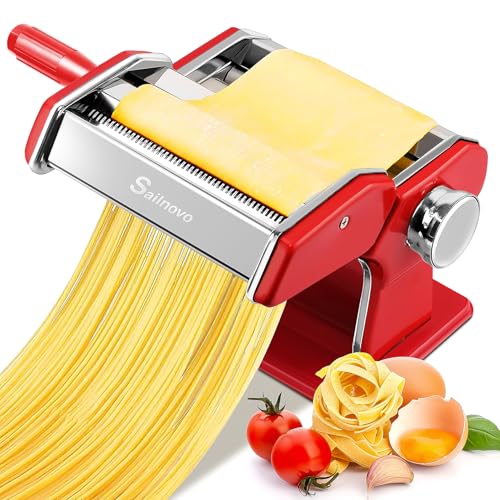
- Nine thickness settings from 0.3 to 3 mm
- Two cutter widths for varied noodles
- Lightweight, detachable, clamp-mounted design
Best For: Beginners and families making varied homemade pasta
Easy-Clean Pick
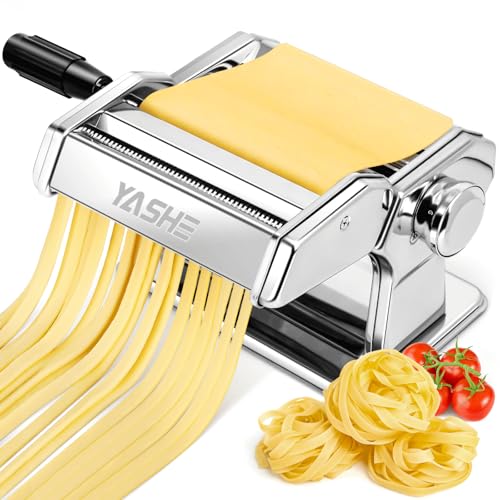
- Nine settings from 0.3 to 3 mm
- 2 mm and 6.5 mm interchangeable cutting widths
- Cleaning brush and cloth included
Best For: Home cooks prioritizing versatility and easier maintenance
Countertop Heritage
Sur La Table Va Bene Pasta Maker

- Nine adjustable dough-thickness settings
- Detachable shaper for spaghetti and fettuccine
- Stainless steel body with handle and clamp
Best For: Cooks wanting a traditional stainless steel manual setup
Compact Manual Control

- 7 thickness settings from 0.5mm to 3mm
- Spaghetti and fettuccine cutter attachments
- Compact stainless steel design with table clamp
Best For: Small kitchens and hands-on pasta making
One-Click Noodle Variety

- Four automatic modes with 150W motor
- Eight discs and 500g flour capacity
- Cleaning brush and dishwasher-safe parts
Best For: Beginners and families wanting automated noodle making
Maximum Thickness Choice

- Nine thickness settings from 0.3mm to 2.6mm
- Two cutter widths for varied pasta styles
- Compact design with clamp and removable cutter
Best For: Hands-on cooks seeking maximum thickness control
Classic Countertop Pick – Marcato Atlas150
MARCATO Atlas150 Manual Pasta Maker Machine-LASAGNA, FETTUCCINE & TAGLIOLINI. Made in Italy
Check Price On AmazonFor shoppers comparing pasta machines for small kitchens, the Marcato Atlas150 offers a compact manual format with a sturdy chrome-steel build. Its 10 settings and three included pasta formats make it a practical choice for hands-on homemade pasta.
Best For: Home cooks who want manual control for lasagna, fettuccine, and tagliolini.
Pros:
- 10 adjustable settings cover sheets from 0.8 to 4.8 mm.
- Includes a crank handle and cutters for lasagna, fettuccine, and tagliolini.
- Chrome-plated and nickel-plated steel construction.
Cons:
- Manual operation requires more hands-on effort.
- Its 8-by-8-inch footprint may still require dedicated storage space.
The Atlas150 is a straightforward, durable-feeling option when you value adjustable thickness and traditional pasta-making control over automation.
Stand Mixer Space Saver – Antree 3-in-1 Attachment
For small kitchens that already have a KitchenAid stand mixer, the Antree attachment can add pasta-making functions without requiring a separate countertop machine. It combines rolling, spaghetti cutting, and fettuccine cutting in one compact set.
Best For: KitchenAid owners who want multiple pasta functions with convenient storage.
Pros:
- Combines a pasta roller, spaghetti cutter, and fettuccine cutter.
- Eight thickness settings support sheets for lasagna, ravioli, dumplings, and more.
- Includes a cleaning brush and removable protective cover.
- SUS304 stainless-steel rollers and cutters.
Cons:
- Requires a compatible KitchenAid stand mixer.
- The attachment adds less value if you do not already own the mixer.
This is a space-conscious solution for existing stand-mixer users, especially those who want varied pasta shapes without adding another full-size appliance.
Versatile Manual Value – Nuvantee 3-in-1 Pasta Maker
The Nuvantee is a useful option among pasta machines for small kitchens when you want a manual appliance with multiple cutting widths. Its seven settings cover dough from 0.5 to 3 mm, while the included cutters support spaghetti and fettuccine-style noodles.
Best For: Beginners and families seeking a manual machine for pasta and dumpling wrappers.
Pros:
- Seven adjustable thickness settings from 0.5 to 3 mm.
- Includes 2 mm and 6 mm cutters for different noodle widths.
- Supports spaghetti, linguini, fettuccini, lasagna, and dumpling wrappers.
- Uses aluminum and stainless-steel components.
Cons:
- Manual operation takes more time and effort than an automatic machine.
- Its listed dimensions are 5.39 by 6.89 by 8.5 inches, so storage should be planned.
With broad thickness adjustment and two cutter widths, the Nuvantee gives small-kitchen cooks a flexible way to make several pasta styles without relying on an electric motor.
Fast Automatic Option – Philips 7000 Series Pasta Maker
The Philips 7000 Series takes a different approach to pasta machines for small kitchens by automating mixing and extrusion. It can prepare up to eight portions and includes eight shaping discs, though its larger body makes it better suited to kitchens with dedicated appliance storage.
Best For: Families and cooks who prioritize quick, low-effort pasta preparation.
Pros:
- 150W automatic operation can make pasta in under 10 minutes.
- Prepares up to eight portions in one batch.
- Includes eight discs for varied pasta shapes.
- Nonstick, dishwasher-safe parts simplify cleanup.
Cons:
- At 20 pounds, it is substantially heavier than the manual options.
- Its 12.87-by-9.02-by-12.68-inch dimensions require more storage space.
- It is less compact for very limited countertops.
The Philips is the convenience-focused choice in this group: excellent for batch cooking and minimal hands-on work, but less suitable if compact storage is your top priority.
Compact Classic – Sailnovo 3-in-1 Pasta Maker
For shoppers comparing pasta machines for small kitchens, the Sailnovo offers manual control without requiring a motor or large countertop footprint. Its clamp-mounted design, adjustable roller, and two cutter widths cover everyday homemade pasta tasks.
Best For: Beginners and families who want a versatile, manually operated pasta maker for spaghetti, fettuccine, lasagna, and dumpling skins.
Pros:
- Nine thickness settings range from 0.3 to 3 mm.
- Two cutting widths produce narrow or wider noodles.
- Lightweight, rust-resistant aluminum-alloy rollers and cutters.
- Detachable design simplifies cleanup with a brush, cloth, or toothpick.
Cons:
- Manual operation requires turning the hand crank.
- Cleaning is recommended with dry tools rather than washing the machine.
The Sailnovo is a practical small-kitchen option when versatility and straightforward storage matter. Its secure clamp and broad thickness range make it approachable for first-time pasta makers.
Easy-Clean Pick – YASHE 3-in-1 Pasta Maker
The YASHE is a strong contender among pasta machines for small kitchens, combining a compact manual format with nine thickness settings and detachable cutters. Its included cleaning brush and cloth are useful for routine maintenance after each batch.
Best For: Home cooks who want adjustable pasta thickness, multiple noodle widths, and an included cleaning kit.
Pros:
- Adjusts from 0.3 to 3 mm for pasta, dumpling skins, and lasagna.
- Includes 2 mm and 6.5 mm cutters for spaghetti and fettuccine-style noodles.
- Food-grade stainless steel and aluminum-alloy construction.
- Comes with a cleaning brush and cloth.
Cons:
- At 2.9 kg, it is not the lightest option in this group.
- Manual cranking takes more hands-on effort than an electric machine.
With its sturdy clamp, detachable cutter, and cleaning accessories, the YASHE balances capability and upkeep. It is especially useful when a small kitchen setup needs one machine for several pasta styles.
Countertop Heritage – Sur La Table Va Bene Pasta Maker
For pasta machines for small kitchens, the Sur La Table Va Bene keeps the setup familiar and focused: a stainless steel manual roller, detachable shaper, handle, and countertop clamp. Its nine settings let you flatten dough for noodles, lasagna, or dumpling skins.
Best For: Cooks who prefer a stainless steel manual pasta maker with a detachable cutter and a stable countertop setup.
Pros:
- Nine adjustable settings provide control over dough thickness.
- Detachable shaper cuts fettuccine and spaghetti strips.
- Stainless steel construction, handle, and clamp included.
- Removable handle fits securely into the roller and shaper.
Cons:
- Care instructions specify hand washing only.
- The supplied notes do not list exact cutter widths.
- Manual operation requires countertop space and hand cranking.
The Va Bene is a streamlined choice for shoppers who value stainless steel construction and a traditional hand-crank workflow. Its detachable shaping component helps keep the machine useful for several classic pasta preparations.
Compact Manual Control – FOHERE 3-in-1 Pasta Maker
For shoppers comparing pasta machines for small kitchens, the FOHERE manual model offers a compact countertop setup with a hand crank, adjustable roller, and integrated cutter. Its 7 thickness levels cover everything from thin dumpling wrappers to thicker pasta sheets, while the clamp helps keep the machine steady during use.
Best For: Small-kitchen cooks who want manual control over pasta thickness without relying on an electric appliance.
Pros:
- Compact 7.87-by-7.68-inch footprint with a 7-level thickness dial.
- Includes cutters for 6.5mm fettuccine and 1.5mm spaghetti.
- Stainless steel and carbon steel construction with a G-clamp for stability.
- Handles sheets from 0.5mm to 3mm thick.
Cons:
- Manual operation requires turning the handle and preparing the dough yourself.
- The supplied notes do not specify the maximum countertop thickness supported by the clamp.
The FOHERE is a practical choice when storage space is limited and you prefer a straightforward, durable manual machine. It is especially useful for cooks who want several thickness options in a relatively small format.
One-Click Noodle Variety – VEVOR Automatic Pasta Maker
If convenience matters when choosing pasta machines for small kitchens, the VEVOR electric model automates mixing, kneading, and extrusion. It has a 500g flour capacity, four automatic modes, and eight pasta discs, making it a space-efficient option for cooks who want fresh noodles with less manual work.
Best For: Busy households and beginners who want automatic fresh noodles and multiple shapes from one machine.
Pros:
- Four automatic modes simplify the pasta-making process.
- 500g flour capacity can produce enough noodles for about four people in approximately 14 minutes.
- Eight discs provide a range of pasta shapes.
- Includes measuring cups, spatula, cleaning brush, and dishwasher-safe parts.
Cons:
- At 11 pounds and 13.4 inches long, it is larger and heavier than the manual options here.
- Incorrect flour-to-water ratios can cause sticking or prevent dough from passing through.
The VEVOR trades some storage convenience for automation and variety. Its rectangular footprint may suit a small kitchen if you have dedicated cabinet or counter space and value quick, low-effort batches.
Maximum Thickness Choice – 3-in-1 Manual Pasta Maker
For a small kitchen that needs flexibility without an electric motor, this 3-in-1 manual pasta maker provides nine thickness settings in a compact body. Its roller and two-width cutter support pasta sheets, spaghetti, fettuccini, lasagna, and dumpling skins, while the table clamp helps prevent movement.
Best For: Home cooks who want the widest manual thickness range and a machine that can be disassembled for cleaning.
Pros:
- Nine settings adjust sheets from 0.3mm to 2.6mm.
- Two cutter widths—2mm and 6.6mm—support different pasta styles.
- Compact 7.87-by-7.67-inch footprint with a sturdy table clamp.
- Redesigned cutter can be dismantled for more thorough cleaning.
Cons:
- Manual rolling and cutting require more hands-on effort than an automatic machine.
- The cutter blades are listed as aluminum rather than stainless steel.
This model is a strong fit for cooks who want precise manual adjustment while keeping the appliance footprint modest. Its nine settings give it an edge for experimenting with sheet thicknesses, provided you have a suitable surface for clamping.
How We Picked the Best Pasta Machines for Small Kitchens
We compared these 10 models by looking at the factors that matter most when counter space is limited. That includes the machine’s overall footprint, storage demands, versatility, ease of operation, and whether it requires a separate stand mixer. We also considered the pasta shapes supported, thickness controls, dough capacity, included accessories, and the likely learning curve for beginners.
Manual machines can offer excellent control with relatively little equipment, while mixer attachments reduce the need for another dedicated appliance. Automatic machines take up more counter and cabinet space but may be worthwhile for frequent pasta makers who want faster, more consistent preparation.
Quick Comparison
| Type | Best for | Main advantage | Space consideration |
|---|---|---|---|
| Manual roller and cutter | Traditional pasta making | Control and simple mechanics | Stores separately but needs clamping space |
| Stand-mixer attachment | KitchenAid owners | Uses an appliance already on the counter | Small attachment storage footprint |
| Automatic pasta maker | Frequent, low-effort use | Mixes, kneads, and extrudes or cuts | Usually bulkier and heavier |
Key Buying Factors for Pasta Machines for Small Kitchens
Counter and Storage Space
Measure both your available counter area and cabinet height before buying. A manual roller may have a smaller body but still needs room for a clamp and a clear path for feeding dough. Attachments are convenient if your stand mixer already has a permanent storage spot. Automatic machines need enough clearance for the lid, controls, and ingredient loading.
Adjustability and Pasta Shapes
More thickness settings help you make delicate sheets, lasagna, fettuccine, or filled-pasta wrappers. Check whether the included cutters match the shapes you actually eat. A machine with fewer accessories can be the better small-kitchen choice if it avoids storing unused parts.
Manual or Automatic Operation
Manual models are usually easier to put away and give you direct control, but rolling and cutting require more hands-on work. Automatic models reduce physical effort and can handle repeat batches, though they generally cost more and require more cleaning and storage space.
Cleaning and Durability
Look for removable accessories where appropriate and follow the manufacturer’s cleaning instructions. Many roller mechanisms should not be submerged. A sturdy body, secure clamp or base, and smooth controls are especially valuable when the machine must be moved in and out of storage.
Who Should Buy Which Pasta Machines for Small Kitchens?
- Choose a manual roller if you want the smallest dedicated setup, traditional control, and the flexibility to make sheets and cut noodles.
- Choose a stand-mixer attachment if you already own a compatible KitchenAid mixer and want to avoid adding another full-size appliance.
- Choose an automatic machine if you make pasta regularly, prefer reduced hands-on work, and have room for a heavier countertop appliance.
- Choose a basic three-in-one model if you are new to homemade pasta and mainly need adjustable sheets plus common noodle cutters.
For most compact kitchens, the best balance is a manual machine or mixer attachment that covers your preferred pasta shapes without adding unnecessary accessories. Measure first, then prioritize storage and cleanup as highly as the number of settings.