Small bakeries that add fresh pasta to the menu need equipment that fits limited space while delivering dependable, repeatable results. The right machine can streamline rolling, cutting, and portion preparation without creating unnecessary cleanup or training demands.
This roundup compares 10 manual and electric options across capacity, control, durability, versatility, and ease of use, so you can match your production needs and budget to the best pasta maker for your bakery.
Best 10 Pasta Machines for Small Bakeries Picks for 2026
Classic Italian Workhorse
MARCATO Atlas150 Manual Pasta Maker

- Chrome- and nickel-plated steel construction
- Three pasta formats included
- 10 thickness settings from 0.8–4.8 mm
Best For: Small-batch traditional pasta production
Flexible Budget Pick
Sailnovo 3-in-1 Manual Pasta Maker
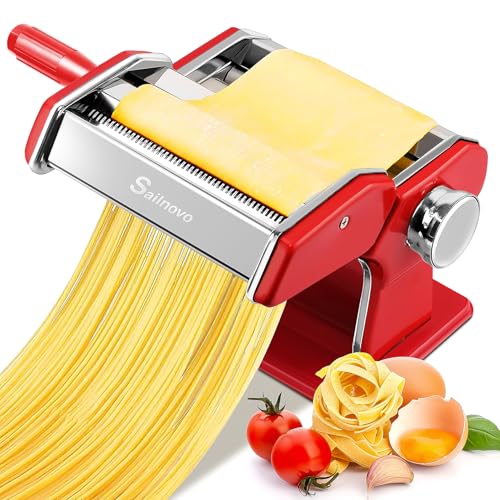
- Nine thickness settings from 0.3–3 mm
- Two cutter widths for varied noodles
- Rust-resistant rollers with desk clip
Best For: Versatile small-batch manual pasta work
Wide-Sheet Specialist
MARCATO Atlas 180 Manual Pasta Machine

- Produces sheets up to 7 inches wide
- 10 thickness positions
- Optional Pastadrive motor compatibility
Best For: Wide lasagna and ravioli sheets
High-Capacity Automatic Option
Philips 7000 Series Pasta Maker

- Automatic 150W preparation
- Makes up to eight portions
- Eight discs plus mixing function
Best For: Higher-volume, multifunctional dough preparation
Italian Craft Pick

- Made in Italy with solid chromed-steel construction
- Six thickness settings and 150mm sheet width
- Expandable with a motor and specialty accessories
Best For: Small bakeries building a durable, expandable manual pasta station
Value Manual Pick

- Seven thickness settings from 0.5mm to 3mm
- Cuts both 6.5mm fettuccine and 1.5mm spaghetti
- G-clamp and non-slip base support steady operation
Best For: Compact bakeries making common pasta cuts in smaller batches
Automatic Batch Pick

- Automatic mixing and extrusion with four modes
- 500g flour capacity and about 14-minute batches
- Eight discs support a wide range of pasta shapes
Best For: Small bakery kitchens seeking lower-effort automatic pasta production
Best All-Around Value
YASHE 3-in-1 Adjustable Pasta Maker
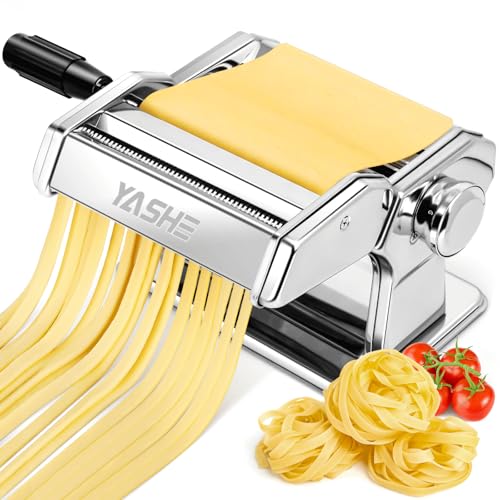
- Nine thickness settings from 0.3 to 3 mm
- Two cutter widths for spaghetti and fettuccine
- Includes clamp, brush, and cleaning cloth
Best For: Small bakeries needing versatile manual pasta production
Best for Simple Batch Prep
Sur La Table Va Bene Manual Pasta Maker

- Nine adjustable rolling settings
- Detachable shaper for spaghetti and fettuccine
- Stainless steel body with handle and clamp
Best For: Small teams wanting stable, uncomplicated manual operation
Best for Fine Dough Control

- Seven thickness settings from 0.5 to 3 mm
- 2 mm and 6 mm cutter widths
- Includes two cutting attachments and a user manual
Best For: Small bakeries needing adjustable sheets and common noodle widths
Classic Italian Workhorse – MARCATO Atlas150 Manual Pasta Maker
MARCATO Atlas150 Manual Pasta Maker Machine-LASAGNA, FETTUCCINE & TAGLIOLINI. Made in Italy
Check Price On AmazonFor small bakeries seeking dependable pasta machines for small bakeries, the MARCATO Atlas150 offers manual control, a chrome-steel build, and three included pasta formats: lasagna, fettuccine, and tagliolini. Its 10 thickness settings support varied sheet styles, from 0.8 to 4.8 millimeters.
Best For: Small bakeries that want a compact manual machine for traditional pasta sheets and noodles.
Pros:
- Made with nickel-plated and chrome-plated steel components.
- Includes cutters for lasagna, fettuccine, and tagliolini.
- Offers 10 thickness settings from 0.8 to 4.8 millimeters.
- Compact footprint at 8 by 8 by 7 inches.
Cons:
- Manual operation requires hand-cranking.
- Its 2.6-kilogram weight may be less convenient for frequent relocation.
The Atlas150 is a focused choice for operations that value hands-on control and established pasta formats over automation. Its sturdy metal construction and broad thickness range make it practical for varied small-batch production.
Flexible Budget Pick – Sailnovo 3-in-1 Manual Pasta Maker
For small bakeries comparing pasta machines for small bakeries, the Sailnovo 3-in-1 combines a hand-cranked roller with two cutter widths and nine thickness settings. Its aluminum-alloy rollers, stainless-steel body, and included desk clip provide a practical setup for varied pasta shapes.
Best For: Small bakeries needing an affordable manual machine for spaghetti, fettuccine, lasagna, and other dough work.
Pros:
- Provides nine thickness settings from 0.3 to 3 millimeters.
- Includes two cutting widths: 2 and 6.25 millimeters.
- Rust-resistant aluminum-alloy rollers and cutters.
- Detachable design supports dry-brush or cloth cleaning.
Cons:
- Manual operation requires hand-cranking.
- Only two cutter widths are listed.
The Sailnovo stands out for flexibility at a straightforward price point, especially where adjustable thickness matters. Its clamp and cleanable detachable structure suit occasional or small-batch bakery use, though it remains a hands-on option.
Wide-Sheet Specialist – MARCATO Atlas 180 Manual Pasta Machine
For bakeries evaluating pasta machines for small bakeries, the MARCATO Atlas 180 provides pasta sheets up to 180 millimeters wide. Its 10-position adjustment knob handles thicknesses from 0.1 centimeters to 3 millimeters, while the manual design can be upgraded with the separately available Pastadrive motor.
Best For: Small bakeries producing wider lasagna or ravioli sheets and seeking future motor compatibility.
Pros:
- Made and assembled in Italy.
- Creates sheets up to 180 millimeters, or 7 inches, wide.
- Offers 10 clear thickness positions.
- Compatible with the separately available Pastadrive motor.
Cons:
- Motor is not included.
- Manual operation requires hand-cranking without the optional motor.
- Only one blade is listed.
The Atlas 180 is particularly useful when sheet width is a priority. Its manual operation keeps the initial setup simple, while optional motor compatibility gives a small bakery a path toward less hand-cranking later.
High-Capacity Automatic Option – Philips 7000 Series Pasta Maker
For small bakeries seeking pasta machines for small bakeries with less manual labor, the Philips 7000 Series uses 150W ProExtrude Technology and automatic operation to prepare up to eight portions in under 10 minutes. Its eight discs support pasta-making, while the mixing function can also help with cookies, pizza, and bread preparation.
Best For: Small bakeries that prioritize automated preparation, larger batches, and multifunctional dough mixing.
Pros:
- Automatic 150W operation prepares pasta in under 10 minutes.
- Can make up to eight portions in one go.
- Includes eight shaping discs and a mixing function.
- Non-stick, dishwasher-safe parts simplify cleanup.
Cons:
- At 20 pounds, it is substantially heavier than the manual alternatives listed.
- The listed sheet-thickness range is limited to 1–1.5 millimeters.
- It has a larger 12.87 by 9.02 by 12.68-inch footprint.
The Philips is the most automation-focused choice in this group, making it attractive when speed and reduced hand work matter. Its large capacity and mixing function add versatility, although the heavier body and narrower listed thickness range may not suit every bakery layout.
Italian Craft Pick – Imperia Classic Line
For small bakeries seeking pasta machines for small bakeries that can handle varied fresh-pasta work, the Imperia Classic Line offers a sturdy manual format with six thickness settings, a 150mm sheet width, and integrated cutters for fettuccine and tagliolini.
Best For: Small bakeries and specialty kitchens that want durable manual production with room to add a motor or accessories.
Pros:
- Solid chromed-steel construction made in Italy.
- Six adjustable roller heights from 0.5mm to 5mm.
- Produces sheets, fettuccine, and tagliolini, with optional expansion for ravioli and other pasta shapes.
- Can accept the compatible Pasta Facile 4600 motor.
Cons:
- Manual operation may require more labor for larger batches.
- Additional motor and specialty accessories are separate purchases.
The included clamp support, crank, cleaning brush, and storage pouch make this a well-equipped starting point. Its expandable design is particularly useful if a bakery expects its fresh-pasta menu to grow.
Value Manual Pick – FOHERE 3-in-1 Pasta Maker
Among pasta machines for small bakeries, the FOHERE 3-in-1 is a straightforward manual option for kitchens that need adjustable sheets and two common noodle cuts without an electric motor.
Best For: Small bakeries and compact prep areas making lasagna sheets, fettuccine, spaghetti, or dumpling wrappers in modest batches.
Pros:
- Seven thickness settings spanning 0.5mm to 3mm.
- Includes cutters for 6.5mm fettuccine and 1.5mm spaghetti.
- Stainless-steel construction with a G-clamp and non-slip base for stability.
- Relatively compact and lightweight at 2.6 pounds.
Cons:
- Manual cranking can be slower and more labor-intensive for bakery production.
- The supplied notes do not specify the maximum countertop thickness supported by the clamp.
- It offers fewer built-in pasta formats than an automatic extruder.
Its seven-position dial gives useful control for thin wrappers through thicker pasta sheets, while the dual cutter covers two familiar service styles. It is best suited to smaller, hands-on production rather than high-volume output.
Automatic Batch Pick – VEVOR 150W Pasta Maker
For bakeries prioritizing reduced hands-on work, the VEVOR electric model is one of the more automated pasta machines for small bakeries, combining four intelligent modes, a 500g flour capacity, and eight pasta-shape discs.
Best For: Small bakery kitchens that want automatic mixing and extrusion for batches of roughly four servings.
Pros:
- Automatic operation with four modes and a 150W motor.
- 500g flour capacity can produce about four servings in approximately 14 minutes.
- Eight discs provide a broad selection of pasta shapes.
- Includes measuring cups, spatula, cleaning brush, and dishwasher-safe parts.
Cons:
- Correct flour-to-water ratios are important to prevent sticking or failed extrusion.
- At 11 pounds, it is heavier and larger than the manual options here.
- Its listed capacity may require multiple cycles for larger bakery orders.
The automatic kneading and extrusion workflow can reduce repetitive labor, and the included accessories simplify setup and cleanup. However, operators should follow the supplied ratio guidance closely and plan around the 500g batch capacity.
Best All-Around Value – YASHE 3-in-1 Adjustable Pasta Maker
For small bakeries seeking versatile pasta machines for small bakeries, the YASHE 3-in-1 combines adjustable sheet thickness with two cutter widths. Its manual design and included cleaning tools make it a practical option for producing pasta, lasagna sheets, and dumpling skins in smaller batches.
Best For: Small bakeries that want broad pasta-making flexibility and straightforward cleanup.
Pros:
- Nine settings adjust dough thickness from 0.3 mm to 3 mm.
- Includes 2 mm and 6.5 mm cutters for spaghetti and fettuccine-style noodles.
- Food-grade stainless steel and aluminum construction with a fixing clamp.
- Cleaning brush and cloth are included.
Cons:
- Manual operation requires hands-on effort for repeated production.
- The included cutters offer two widths rather than a wider range of shapes.
The YASHE is a strong fit when one compact manual machine needs to handle several pasta formats. Its wide thickness range and cleaning kit add useful versatility for a small bakery workflow.
Best for Simple Batch Prep – Sur La Table Va Bene Manual Pasta Maker
The Sur La Table Va Bene is a straightforward choice among pasta machines for small bakeries, with a stainless steel body, hand crank, detachable pasta shaper, and countertop clamp. It is designed for rolling dough and cutting spaghetti or fettuccine without adding motorized complexity.
Best For: Small bakery teams that prioritize stable countertop use and simple manual operation.
Pros:
- Nine adjustable rolling settings support different dough thicknesses.
- Detachable shaper cuts spaghetti and fettuccine strips.
- Removable handle and clamp support controlled, stable operation.
- Stainless steel construction and hand-wash care instructions.
Cons:
- Hand wash only, which may add cleanup time.
- The supplied notes list fewer detailed thickness specifications than some alternatives.
- Its cutting setup focuses on spaghetti and fettuccine rather than multiple cutter widths.
This model makes sense for a bakery that wants a familiar hand-crank workflow and secure countertop positioning. Its detachable shaper keeps the setup focused on two popular noodle styles.
Best for Fine Dough Control – Nuvantee 3-in-1 Pasta Maker
The Nuvantee offers useful control for small bakeries comparing pasta machines for small bakeries. Its seven thickness settings span 0.5 mm to 3 mm, while the two-width cutter supports spaghetti, linguine, fettuccine, lasagna, and other fresh pasta preparations.
Best For: Small bakeries that need adjustable sheets and two practical noodle widths.
Pros:
- Seven settings adjust dough from 0.5 mm to 3 mm.
- Two cutters produce 2 mm and 6 mm noodles.
- Aluminum and stainless steel construction with a manual operating design.
- Includes a user-friendly manual and two cutting attachments.
Cons:
- It has fewer thickness settings than the YASHE model.
- Manual cranking may be less efficient for high-volume production.
- The cutter blades are listed as aluminum rather than stainless steel.
The Nuvantee is a balanced option when precise thickness adjustment matters more than having many specialty attachments. Its two cutter widths cover common pasta formats while keeping the machine relatively simple.
How We Picked the Best Pasta Machines for Small Bakeries
We focused on the factors that matter most in a small commercial food operation: roller and cutter versatility, thickness adjustment, construction, production speed, batch capacity, cleanup, footprint, and operating effort. Manual models can offer excellent control and lower upfront cost, while electric machines may be more practical when the bakery prepares pasta frequently or in larger batches.
We also considered whether each machine supports common formats such as lasagna sheets, fettuccine, spaghetti, or tagliolini. Accessories and included settings matter because they can reduce the need for separate equipment.
Quick Comparison
| Machine type | Best for | Main advantage | Potential limitation |
|---|---|---|---|
| Manual roller and cutter | Small batches and hands-on preparation | Precise control and simple mechanics | Requires staff effort and a stable work surface |
| Electric automatic maker | Frequent or higher-volume production | Faster mixing, extrusion, and portion preparation | Higher cost and more parts to clean |
| Multi-purpose 3-in-1 model | Menus with several pasta shapes | Useful versatility in a compact footprint | May compromise on heavy-duty durability |
Key Buying Factors for Pasta Machines for Small Bakeries
Capacity and Daily Volume
Estimate how much pasta you prepare during a typical service, not just the machine’s advertised maximum. A manual machine may suit occasional batches, while an electric model with a larger flour capacity can save labor during repeated production runs.
Construction and Stability
Steel rollers and a secure clamp or locking base are important for consistent sheets and safer operation. Check the available counter space and confirm that the machine can be anchored without interfering with other bakery equipment.
Thickness and Shape Control
Multiple thickness settings help you produce different dishes, from thin noodles to sturdy lasagna sheets. Review the included cutters or discs carefully; a machine’s versatility is only useful if its attachments match your menu.
Cleaning and Maintenance
Fresh dough can collect in rollers, cutters, and extrusion parts. Favor designs with accessible components and follow the manufacturer’s cleaning instructions. Never assume parts are dishwasher-safe unless the documentation says so.
Labor, Noise, and Workflow
Manual machines require coordinated staff effort but are generally straightforward and quiet. Electric machines reduce rolling or mixing labor, though they add motor noise, power requirements, and more setup steps.
Who Should Buy Which Pasta Machines for Small Bakeries?
Choose a Manual Machine If:
Your bakery makes modest quantities, values hands-on control, or needs an affordable machine for a compact prep area. Manual Atlas, Imperia, FOHERE, YASHE, Sur La Table, and Nuvantee-style options are especially suited to occasional or small-batch production, provided staff can manage the crank and dough preparation.
Choose an Electric Machine If:
You prepare pasta regularly, need to reduce repetitive labor, or want automated mixing and shaping. Electric Philips and VEVOR-style machines make more sense when speed and convenience outweigh the added cost and cleaning requirements.
Choose a Versatile 3-In-1 Model If:
Your menu changes frequently and you need several noodle widths from one countertop appliance. Before buying, verify output consistency, replacement-part availability, and whether the included attachments support your busiest products.