The right citrus juicer can help a café, bar, juice counter, or catering operation serve fresh drinks faster while controlling labor, waste, and cleanup. This roundup compares 10 commercial-friendly manual and electric models for different workloads and budgets.
Use the guide below to match pressing speed, durability, capacity, and footprint with your daily service demands.
Best 10 Citrus Juicers for Small Businesses Picks for 2026
Classic Manual Workhorse

- Up to 2,000 pounds of pressing force
- Acid-resistant metal and enamel construction
- NSF certified with removable parts
Best For: Busy counters wanting a durable manual citrus press
Premium Lever Press
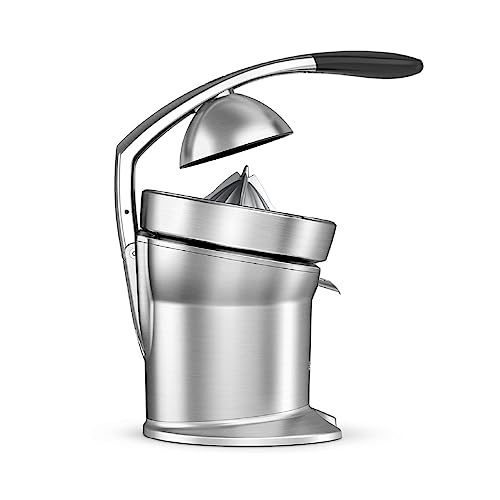
- Power-assisted lever reduces pressing effort
- Acid-resistant die-cast stainless cone
- Dishwasher-safe removable components
Best For: Cafes needing assisted, consistent citrus pressing
Heavy-Duty Clamp Press
Can-Can Commercial Citrus Juicer

- Clamping system suits intensive use
- Stable pressing with little force
- Dishwasher-safe stainless steel design
Best For: Small businesses pressing citrus and pomegranates
Compact Motorized Press
Breville BCP600SIL Citrus Press
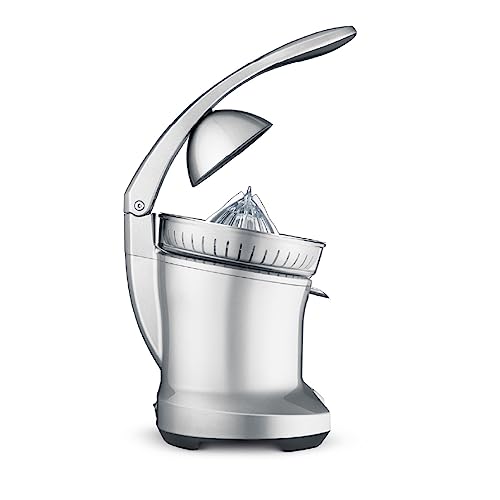
- Automatic motor with one-handed operation
- One-size-fits-all cone for citrus varieties
- Dishwasher-safe parts and drip-stop spout
Best For: Small counters wanting effortless electric juicing
Efficient Countertop Power
Eurolux Electric Citrus Juicer

- Quiet 120-watt motor with automatic operation
- Universal cone and integrated seed filter
- Stainless steel body with dishwasher-safe parts
Best For: Powered orange and lemon service in cafes and small kitchens
Heavy-Duty Manual Press

- Reinforced cast-iron construction
- Long lever and nonslip suction base
- Removable stainless strainer and dishwasher-safe parts
Best For: Bars, cafes, and restaurants wanting manual pressing power
Hands-Free Splash-Free Pressing

- Fully enclosed automatic extraction in about 10 seconds
- Fits limes through 4.5-inch grapefruits
- 12-ounce bowl with fine and coarse pulp filters
Best For: Compact drink stations prioritizing tidy, hands-free operation
Manual Workhorse

- Cast-iron body with 304 stainless steel strainer
- Long comfort-grip handle and safety lock hat
- Rind-free manual extraction for several citrus fruits
Best For: Restaurants, bars, and markets needing cord-free juice extraction
Quiet Countertop Pick

- 150W motor with two sizes of juicing cones
- Dishwasher-safe removable parts
- Anti-drip spout and four non-slip rubber feet
Best For: Small food-service counters wanting powered, quieter citrus pressing
Fast Pitcher Juicer
80W Citrus Squeezer with 24oz Pitcher

- Pressure-activated 80W motor
- 24-ounce pitcher with pulp and seed filter
- Two cones and top-rack dishwasher-safe attachments
Best For: Small counters needing quick, contained citrus juice servings
Classic Manual Workhorse – Hamilton Beach Commercial 932
For small businesses seeking citrus juicers for small businesses without adding electrical complexity, the Hamilton Beach Commercial 932 is a durable manual option. Its high-force extractor arm is designed to maximize juice output from lemons, limes, oranges, and grapefruits, while its acid-resistant finish suits frequent citrus use.
Best For: Cafes, bars, and food-service counters that prefer a sturdy manual press.
Pros:
- Extractor arm delivers up to 2,000 pounds of force for efficient pressing.
- Metal construction and enamel finish resist wear from citrus acids.
- Sure Grip feet help prevent tipping during use.
- Removable strainer cone and funnel simplify cleaning and sanitizing.
Cons:
- Manual operation requires staff to press each fruit.
- Hand-wash-only care may take more time than dishwasher-safe alternatives.
- Its 8-fluid-ounce capacity may require frequent emptying during busy service.
The NSF certification and commercial-grade construction make this a practical choice where reliability and food-service suitability matter more than automation.
Premium Lever Press – Breville Citrus Press Pro
The Breville 800CPXL is a polished electric option for businesses comparing citrus juicers for small businesses. Its power-assisted lever, acid-resistant die-cast cone, and adjustable pulp control support consistent pressing across small and large citrus fruit with less manual effort.
Best For: Cafes, juice bars, and hospitality settings that want assisted pressing and streamlined cleanup.
Pros:
- Power-assisted active-arm lever makes pressing easier.
- Quadra-Fin cone is designed to extract juice from varied citrus sizes.
- Dual-switch safety system helps prevent operation before the arm is lowered.
- Removable juicing parts, including the cone and collector, are dishwasher safe.
Cons:
- Its 10.6-pound body and wider footprint require dedicated counter space.
- Electric operation adds dependence on a power outlet.
- The one-year limited warranty is relatively short for a commercial-use appliance.
With a sturdy die-cast body, drip-stop spout, and assisted lever, the 800CPXL is well suited to businesses that prioritize ease of use and a refined countertop setup.
Heavy-Duty Clamp Press – Can-Can Commercial Citrus Juicer
The Can-Can Commercial Grade Pomegranate and Citrus Juicer offers a compact manual design for operations evaluating citrus juicers for small businesses. Its clamping system is intended for intensive use, while the stainless steel construction and stable pressing action support repeat service without requiring high force.
Best For: Small commercial kitchens, juice counters, and businesses that also press pomegranates.
Pros:
- Clamping system is designed for frequent, intensive use.
- Pressing action is described as stable and low effort.
- Stainless steel construction supports long-term durability.
- Dishwasher-safe care can simplify cleanup.
Cons:
- Manual operation is slower than a motorized press for continuous batches.
- Its approximately 21.65-inch height may limit placement under some shelves.
- The listed 0.24-liter capacity is relatively modest.
This is a sensible pick when durability, portability, and multi-fruit capability are more important than maximum automation or a large collection vessel.
Compact Motorized Press – Breville BCP600SIL Citrus Press
The Breville BCP600SIL is a convenient motorized choice for businesses comparing citrus juicers for small businesses. Its one-handed operation, one-size-fits-all cone, and automatic motor are designed to handle limes through grapefruits with minimal effort.
Best For: Cafes and small service counters that want simple electric pressing with easy cleanup.
Pros:
- Motorized operation reduces staff effort during pressing.
- One-size-fits-all cone accommodates small and large citrus fruit.
- Dual-switch safety design requires the arm to be lowered before operation.
- Removable juicing components are dishwasher safe.
Cons:
- Electric operation requires access to a suitable outlet.
- Its tall, nearly 18-inch profile may need careful counter placement.
- The product uses a plastic body rather than an all-metal construction.
The BCP600SIL balances straightforward operation with features such as a magnetic fruit dome and drip-stop spout, making it a practical fit for lower-effort daily service.
Efficient Countertop Power – Eurolux Electric Citrus Juicer
For small businesses seeking citrus juicers for small businesses, the Eurolux offers powered extraction with a quiet 120-watt motor, one-touch operation, and a stainless steel countertop design. Its integrated filter and universal cone support straightforward orange and lemon service.
Best For: Cafes, juice stations, and small commercial kitchens that want electric pressing without a large footprint.
Pros:
- Soft-grip handle starts and stops automatic juicing with light pressure.
- Quiet, energy-efficient 120-watt motor includes overheat protection.
- Integrated filter helps produce seedless juice, while the one-size cone fits varied fruit sizes.
- Dishwasher-safe parts simplify cleanup.
Cons:
- Requires access to a power outlet.
- Its 13-inch depth and larger design may need dedicated counter space.
The Eurolux is a practical choice when consistent electric assistance and easy operation matter more than a fully enclosed or high-capacity commercial system.
Heavy-Duty Manual Press – CO-Z Commercial Citrus Juicer
The CO-Z is a strong candidate among citrus juicers for small businesses that prefer manual control and no electricity. Its cast-iron construction, long lever, and stainless steel fruit-contact components are designed for repeated pressing of citrus and pomegranates.
Best For: Bars, cafes, restaurants, and mobile setups needing a sturdy manual press for varied fruit.
Pros:
- Heavy-duty cast iron is designed to withstand more than 2300 psi.
- Extra-long rubber-grip lever reduces effort when pressing firm fruit.
- Five-inch funnel accommodates oranges, lemons, limes, grapefruit, and pomegranates.
- Removable, dishwasher-safe components support quick cleaning.
Cons:
- Manual operation is slower and more labor-dependent than an automatic juicer.
- At about 6 kg and 15.3 inches tall, it is relatively substantial for a countertop appliance.
Choose the CO-Z when durability, portability, and electricity-free operation are priorities. It is especially useful for businesses serving fresh juice or cocktails in batches that can be handled manually.
Hands-Free Splash-Free Pressing – Vinci Automatic Citrus Juicer
For compact drink stations considering citrus juicers for small businesses, the Vinci emphasizes hands-free convenience. Place a halved fruit inside the enclosed chamber, press Auto Juice, and the machine extracts juice in about 10 seconds while its pressure-sensitive system helps limit bitter rind scraping.
Best For: Small cafes, cocktail bars, and prep areas that value contained, repeatable citrus extraction.
Pros:
- Fully enclosed operation helps reduce splashing and hands-on pressing.
- Pressure-sensitive extraction adapts to rind thickness and helps avoid excess scraping.
- Handles citrus from small limes through grapefruit up to 4.5 inches in diameter.
- Includes fine and coarse pulp filters, a locking spout, and top-rack dishwasher-safe removable parts.
Cons:
- The 12-ounce bowl may require frequent emptying during higher-volume service.
- Its 50-watt motor is designed for citrus use rather than broad-purpose juicing.
The Vinci is a convenient fit where cleanliness and operator efficiency are important. Its enclosed chamber and adjustable pulp control make it particularly suitable for drinks, recipes, and cocktail preparation.
Manual Workhorse – Commercial Citrus Hand Press
For small businesses seeking citrus juicers for small businesses without adding electrical equipment, the ROVSUN hand press is a sturdy manual option. Its cast-iron body, stainless steel strainer, long handle, and rind-free extraction suit fresh orange, lemon, lime, grapefruit, and pomegranate service.
Best For: Restaurants, bars, markets, and other businesses that want manual juice extraction with no motor or cord.
Pros:
- Heavy-duty cast-iron construction with a 304 stainless steel strainer.
- Long, comfortable-grip handle is designed to reduce hand pressure.
- Manual pressing avoids rubbing the rind, helping limit bitter flavors.
- Removable strainer cone and funnel simplify cleanup.
Cons:
- Manual operation requires repeated pressing by staff.
- Hand-wash care may take more time than dishwasher-safe alternatives.
- Its 14.57-inch height may require dedicated counter or storage space.
The ROVSUN is a practical fit when durability, quiet operation, and control matter more than automation. The included safety hat helps lock the handle in place during storage or when not in use.
Quiet Countertop Pick – 150W Electric Citrus Juicer
The Healnitor offers an efficient electric approach for small businesses seeking citrus juicers for small businesses. Its 150W motor, two juicing cones, stainless steel body, anti-drip spout, and compact footprint are suited to regular counter service.
Best For: Small cafés, juice counters, and kitchens that want powered citrus pressing with relatively quiet operation and easy cleanup.
Pros:
- 150W corded motor supports powered citrus juicing.
- Two cone sizes accommodate fruits from limes and lemons to oranges and grapefruit.
- Removable parts are dishwasher safe for simpler cleanup.
- Anti-drip spout, stainless steel slag tray, and non-slip feet help keep service tidy and stable.
Cons:
- Requires access to a 110V electrical outlet.
- Its 6.5-by-8.8-inch footprint still uses valuable counter space.
- Powered equipment adds a motor and cord to maintain.
With a stated noise level of no higher than 60 dB, the Healnitor balances convenience and a quieter workspace. It is a sensible choice when staff efficiency and dishwasher-safe components are priorities.
Fast Pitcher Juicer – 80W Citrus Squeezer with 24oz Pitcher
For businesses comparing citrus juicers for small businesses, the Astralship combines pressure-activated operation with a 24-ounce pitcher and dual cones. Its compact stainless steel design is aimed at quick, straightforward servings of orange, lemon, and grapefruit juice.
Best For: Small kitchens and service counters that need quick batch-friendly pours, automatic start-and-stop pressing, and dishwasher-safe attachments.
Pros:
- Pressure activation starts and stops the 80W motor as fruit is pressed.
- Two nesting cones fit both small and large citrus.
- 24-ounce pitcher includes measurement markings, a handle, and an integrated pulp filter.
- Pitcher, filter, cones, lid, and dust cover are top-rack dishwasher safe.
Cons:
- Its 80W motor is lower powered than the 150W Healnitor.
- The 24-ounce pitcher may require refilling during higher-volume service.
- It requires a 120V AC connection.
The Astralship is especially appealing when a business wants a contained pitcher-and-filter setup rather than filling individual glasses directly. The weighted stainless steel base and pressure control support stable, low-effort operation.
How We Picked the Best Citrus Juicers for Small Businesses
We focused on features that matter in real commercial settings: construction quality, pressing consistency, ease of cleaning, operating speed, juice capacity, counter-space requirements, and the ability to handle common fruits such as lemons, limes, oranges, grapefruits, and pomegranates. The selection includes both manual presses and motorized machines so businesses can choose between lower upfront cost, greater control, and faster service.
We also considered practical details such as removable strainers, interchangeable cones, non-slip bases, pressure-activated operation, noise, and finishes that can withstand frequent contact with citrus juice.
Quick Comparison
- Manual presses: Best for high leverage, low operating cost, and dependable operation without a motor. They suit bars, restaurants, and businesses that value durability over automation.
- Electric citrus presses: Better for repeated orders and staff-friendly operation. They generally reduce hand effort and can improve consistency during busy periods.
- Compact electric models: A practical choice for small counters, coffee shops, offices, and mobile catering setups with moderate demand.
- Heavy-duty commercial presses: Prefer these when the juicer will see frequent use, larger fruit, or demanding service conditions.
Key Buying Factors for Citrus Juicers for Small Businesses
Daily Volume and Service Speed
Estimate how many drinks or juice portions you prepare during your busiest hour, not just your daily average. Manual presses can be extremely fast with an experienced operator, while electric machines reduce fatigue when many orders arrive together.
Manual Versus Electric Operation
Manual models are mechanically simple, quiet, and inexpensive to operate. Electric models offer convenience and more uniform pressing, but they add motor noise, electrical requirements, and additional parts that may need maintenance.
Materials and Stability
Look for stainless steel or corrosion-resistant components, a sturdy frame, and non-slip feet. Citrus juice is acidic, so finishes should be easy to wipe down and resistant to staining or corrosion. A stable base also improves safety when pressing hard fruit.
Cleaning and Yield
Removable cones and strainers make end-of-shift cleaning easier. Check whether parts are dishwasher-safe and whether the design limits pulp buildup. Cone size matters too: a versatile set can accommodate small limes as well as larger oranges and grapefruits.
Capacity and Footprint
Consider pitcher size, drip clearance, and where the machine will sit during service. A compact juicer may be ideal for a limited counter, while a larger press can be more efficient in a dedicated prep area.
Who Should Buy Which Citrus Juicers for Small Businesses?
Choose a manual press if you want maximum durability, quiet operation, and minimal maintenance. It is especially suitable for cocktail bars and businesses with moderate but frequent citrus orders.
Choose an electric press if staff comfort and hands-free operation are priorities or if you regularly prepare fresh orange juice in volume. These models are often the better fit for cafés, breakfast venues, and juice bars.
Choose a compact model for a small café, office refreshment station, food truck, or occasional catering use. Choose a heavier commercial design when uptime, leverage, and long-term serviceability matter more than portability.