Making peanut, almond, or cashew butter at home can be faster and more affordable with the right countertop grinder. This roundup compares 10 nut butter machines under $300, including compact home models and higher-output electric mills.
Because capacity, motor power, cleanup, and control options vary widely, use the buying guide below to match the machine to your typical batch size and ingredients.
Best 10 Nut Butter Machines Under 300 Picks for 2026
Best Commercial-Style Pick

- 1100W motor with fine-grinding wheel
- Up to 33.07 lb. per hour
- Stainless steel body with overload protection
Best For: High-volume home or small commercial grinding
Best Multifunctional Option

- 10 automatic blending and cooking functions
- Auto-cleaning, keep-warm, and delay start
- 304 stainless steel container and blades
Best For: Small-batch nut milk and versatile home recipes
Best High-Power Grinder
1900W Commercial Peanut Butter Maker
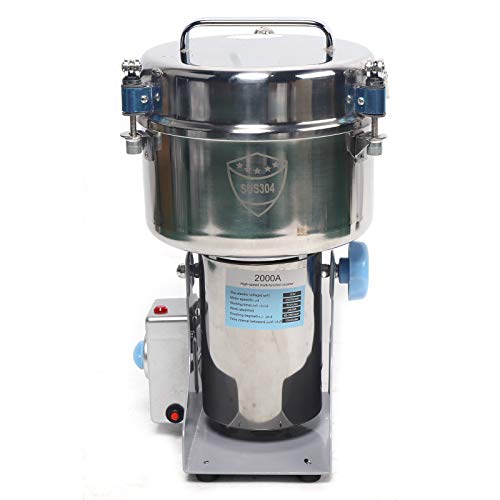
- 1900W motor rated at 32,000 RPM
- 4.41-pound collection container
- 270-degree swing design and overload protection
Best For: Powerful grinding of nuts, grains, spices, and coffee
Best Compact Home Pick

- One-click operation for simple use
- 2.6-pound capacity for small batches
- Makes peanut, almond, and walnut butters
Best For: Easy everyday nut butter making in a home kitchen
High-Capacity Workhorse
1100W Commercial Nut Butter Maker
- 15 kg/33 lb per hour stated capacity
- Durable aluminum and stainless steel construction
- Fully assembled for 110V operation
Best For: High-volume home or small-business grinding
Easy-Use Grinder
Adjustable 33-Lb-Per-Hour Nut Butter Maker

- 33.07 lb-per-hour stated capacity
- Handles adjust grinding coarseness
- Detachable design and overload protection
Best For: Flexible texture control and easier cleanup
Safety-Focused Pick
Adjustable Stainless Steel Nut Butter Grinder

- 33 lb-per-hour stated grinding rate
- Coarse-to-fine adjustment handles
- Overload protection and anti-slip feet
Best For: Versatile grinding with added safety features
Compact Pick

- Grinds nuts and seeds for homemade spreads
- Compact, lightweight countertop design
- Accepts sweeteners and spices for customization
Best For: Small kitchens and personal-size batches
High-Capacity Pick
1100W Commercial Nut Butter Grinder
- Processes up to 33 pounds per hour
- Adjustable coarse and fine grinding
- Large hopper for continuous feeding
Best For: Small businesses and high-volume preparation
Lightweight Pick
500 ml Automatic Peanut Butter Maker

- 500 ml household grinding capacity
- Compact and lightweight at about 1.3 kg
- Polished surfaces described as easy to clean
Best For: Everyday home nut butter preparation
Best Commercial-Style Pick – 1100W Nut Butter Machine
If you need one of the more capable nut butter machines under 300, this 1100W electric model emphasizes steady output and a durable metal build. It is designed for peanuts, almonds, sesame, rice, and similar ingredients, with a stated capacity of up to 33.07 pounds per hour.
Best For: Home users with high-volume grinding needs and small commercial-style applications.
Pros:
- Stainless steel housing and aluminum crushing bin are built for durability and corrosion resistance.
- 1100W copper motor and white jade grinding wheel are designed for fine grinding.
- Heat-dissipation openings and overload protection support extended operation.
- Detachable, smooth-surface design makes cleanup relatively straightforward.
Cons:
- Its tall 25.2-inch profile may require dedicated counter or storage space.
- The high stated capacity may be more than needed for occasional household batches.
This is a practical choice when throughput and a more robust construction matter more than compact storage. Its broad grinding capability makes it versatile, but its commercial-style size is worth considering before buying.
Best Multifunctional Option – 34oz Automatic Nut Milk Maker
Among nut butter machines under 300, this 34-ounce automatic model stands out for users who want more than a dedicated grinder. It combines blending and heating functions for nut milk, smoothies, chowders, juice, and other preparations, with touch controls and automatic cleaning.
Best For: Households making small batches of nut milk and other blended or heated recipes.
Pros:
- Offers 10 functions, including nut, bean, oat, juice, and chowder modes.
- Can skip soaking and includes boiling, keep-warm, delay-start, and auto-cleaning features.
- 304 stainless steel container and stainless steel cross blades are designed for smooth blending.
- Includes a nut milk bag, mesh strainer, measuring spoon, brush, manual, and recipe materials.
Cons:
- Its 34-ounce capacity is intended for smaller household batches rather than high-volume production.
- This is a multifunction nut milk maker, not a dedicated high-throughput nut butter grinder.
Choose this model if convenience and recipe flexibility are priorities. Its automated programs and cleaning cycle reduce hands-on work, while the compact capacity suits everyday family use in smaller quantities.
Best High-Power Grinder – 1900W Commercial Peanut Butter Maker
For shoppers comparing nut butter machines under 300 with power in mind, this 1900W commercial-style grinder offers a 4.41-pound collection container and a high-speed motor. It is designed for nuts, grains, seeds, spices, herbs, coffee, and other dry ingredients.
Best For: Users who want a powerful, versatile dry-ingredient grinder for larger batches.
Pros:
- 1900W pure copper motor reaches a stated 32,000 RPM.
- Three blade layers and a 60-to-350-mesh fineness range support fine grinding.
- 270-degree swing design helps with grinding and emptying the container.
- Includes overload protection, rubber feet, a detachable container and blade, and timer operation.
Cons:
- The 4.41-pound container is smaller than the hourly capacity of some larger mill-style machines.
- Its industrial design and broad dry-grinding capability may be excessive for simple occasional nut butter use.
This model makes the most sense when motor power and ingredient versatility are central to your decision. The swing mechanism and removable components add practicality, while the commercial format favors users prepared for a more specialized appliance.
Best Compact Home Pick – Automatic Peanut Butter Maker
If you are looking for a straightforward option among nut butter machines under 300, this compact automatic peanut butter maker is aimed at home kitchens. Its one-click operation handles peanut, almond, walnut, and similar nut sauces, while a 2.6-pound capacity supports modest batches.
Best For: Home cooks who want simple, small-batch nut butter preparation.
Pros:
- One-click operation avoids complicated settings.
- Compact 3-pound design is easier to position and store than larger commercial-style machines.
- Can make peanut butter along with almond butter, walnut butter, and similar nut sauces.
- Slip-resistant feet and cooling holes support stability and motor ventilation.
Cons:
- The 2.6-pound capacity is suited to smaller batches.
- ABS construction may feel less substantial than the stainless steel bodies on larger models.
This is the most approachable choice for users who value simple controls and a smaller footprint. It does not offer the stated high-volume capacity of the commercial-style alternatives, but its design is well matched to routine home use.
High-Capacity Workhorse – 1100W Commercial Nut Butter Maker
Among nut butter machines under 300, this 1100W model stands out for buyers who want substantial output in a sturdy, ready-to-use package. Its 15 kg-per-hour capacity and compatibility with peanuts, almonds, cashews, and sesame make it suited to frequent batch grinding.
Best For: Home users, small food businesses, and anyone prioritizing high-volume grinding with an all-metal build.
Pros:
- 1100W pure copper motor runs at 2,850 rpm for fast grinding.
- Up to 33 pounds per hour of stated grinding capacity.
- Aluminum alloy and stainless steel construction is designed for durability and corrosion resistance.
- Fully assembled for immediate use with a 110V outlet.
Cons:
- The freestanding unit is relatively tall at 25.2 inches.
- The supplied notes do not specify an included texture-adjustment control.
This is a practical pick when throughput and robust construction matter more than compact storage. Confirm that you have enough counter or floor space for its commercial-style footprint.
Easy-Use Grinder – Adjustable 33-Lb-Per-Hour Nut Butter Maker
This nut butter machine under 300 combines commercial-style capacity with controls aimed at straightforward operation. The 1100W motor, adjustable grinding handles, overload protection, and detachable design make it a versatile option for peanuts, almonds, cashews, sesame, and similar ingredients.
Best For: Buyers who want adjustable texture control, extended-use safety features, and simpler cleanup.
Pros:
- Produces up to 33.07 pounds of ingredients per hour.
- Two handles allow adjustment from coarser to finer grinding.
- Heat sinks and overload protection support steadier operation.
- Fully assembled with a large hopper and detachable, smooth-surface design.
Cons:
- The 25.2-inch height may be inconvenient under low cabinets.
- The notes identify an English manual but do not list additional accessories.
Choose this model if texture flexibility and maintenance are key priorities. Its large hopper and long power cord also help make continuous feeding more convenient in a suitable workspace.
Safety-Focused Pick – Adjustable Stainless Steel Nut Butter Grinder
For shoppers comparing nut butter machines under 300, this model offers high stated output with added attention to stability and texture adjustment. It is designed for peanuts, sesame, almonds, cashews, rice, and other dry ingredients, making it useful for both household recipes and small commercial applications.
Best For: Users who want adjustable fineness, broad ingredient versatility, and safety-oriented design features.
Pros:
- 1100W motor and white jade grinding wheel are rated for 33 pounds per hour.
- Dual handles provide coarse-to-fine texture adjustment.
- Overload protection, heat-dissipation holes, anti-slip pads, and a locking buckle support safer operation.
- Stainless steel housing and aluminum crushing bin offer a corrosion-resistant build.
Cons:
- The listed specifications include both a 1100W motor description and a 300W wattage detail, so buyers should verify the rating.
- Its 19.49-inch height and 13.58-inch depth still require dedicated counter space.
- The listed capacity detail is 2.2 pounds, while the grinding rate is stated as 33 pounds per hour.
This grinder has an appealing feature set for users who value control and protective hardware. However, the conflicting wattage and capacity details make specification confirmation especially important before purchase.
Compact Pick – 300 ml Peanut Butter Maker
If you want one of the more compact nut butter machines under 300, this countertop model is designed for small-batch spreads. Its 300 ml capacity and lightweight plastic construction make it practical for occasional peanut, almond, cashew, seed, and flavored butter preparation.
Best For: Small kitchens, personal batches, and users who want a portable nut and seed grinder.
Pros:
- Grinds peanuts, cashews, almonds, hazelnuts, walnuts, and several seeds.
- Supports additions such as honey, chocolate, sugar, cinnamon, and salt.
- Compact, lightweight design with a non-slip base.
- Simple countertop setup for chopping, grinding, and mixing.
Cons:
- The 300 ml capacity is suited to smaller batches.
- The plastic construction may be less suitable for heavy-duty use.
- Prepared butter should be refrigerated after grinding.
This is a sensible choice when storage space and batch size matter more than commercial throughput. Its broad ingredient compatibility also makes it useful for experimenting with homemade nut and seed spreads.
High-Capacity Pick – 1100W Commercial Nut Butter Grinder
Among nut butter machines under 300, this 1100W grinder is aimed at buyers who need substantially higher output. Its stated capacity of up to 33 pounds per hour, adjustable texture controls, and large hopper make it better suited to frequent preparation than small household models.
Best For: Small shops, restaurants, commercial food preparation, and high-volume home use.
Pros:
- 1100W pure copper motor with a stated speed of 2850 r/min.
- Processes peanuts, sesame, almonds, cashews, rice, and other dry ingredients.
- Adjustable controls support coarse or fine grinding.
- Large hopper and locking buckle support continuous, cleaner feeding.
Cons:
- Its 25.2-by-10.6-by-25-inch dimensions require substantial counter or storage space.
- The commercial-oriented design may be more machine than occasional users need.
- The supplied notes do not specify a small-batch minimum or cleanup accessories.
This model stands out for throughput and control rather than portability. If you regularly make nut butter, sesame sauce, or grain paste in larger quantities, its adjustable grinding and heat-dissipation features are the main reasons to consider it.
Lightweight Pick – 500 ml Automatic Peanut Butter Maker
This 500 ml electric grinder is a practical middle ground among nut butter machines under 300. It combines a compact footprint with a 250W motor and is intended for household grinding of peanuts, cashews, hazelnuts, sesame, and other ingredients.
Best For: Home users who want a compact machine with more capacity than a personal-size grinder.
Pros:
- 500 ml capacity supports modest household batches.
- Grinds nuts and can also be used for coffee and other dry ingredients according to the supplied notes.
- Compact dimensions and approximately 1.3 kg weight make storage easier.
- Polished surfaces are described as smooth and easy to clean.
Cons:
- The 250W motor is less powerful than the 1100W commercial model in this roundup.
- The plastic construction may not suit intensive commercial use.
- The supplied information does not state an adjustable texture-control system.
Choose this model if you want a lightweight household appliance without moving up to commercial-scale equipment. Its 500 ml capacity offers a useful balance for routine homemade spreads while keeping the machine relatively easy to store.
How We Picked the Best Nut Butter Machines Under 300
We focused on machines that are positioned for nut butter, sesame sauce, or similar grinding tasks and compared the specifications most likely to affect everyday use. Our evaluation considers motor wattage, stated output, hopper or container capacity, construction, controls, cleaning requirements, and suitability for home or small-batch commercial preparation.
Product listings can use different capacity and performance measurements, so treat advertised pounds-per-hour figures as estimates rather than guaranteed results. Ingredient type, roast level, oil content, grind setting, and operating time can all change the final texture and speed.
Quick Comparison
| Best For | What to Prioritize | Typical Option in This Roundup |
|---|---|---|
| Occasional home use | Compact design, simple controls, and easy cleanup | Small automatic or kitchen-focused models |
| Family-size batches | Stronger motor and larger working capacity | 1100W machines rated around 33 pounds per hour |
| Frequent production | Heavy-duty construction, stable base, and sustained-duty design | Commercial-style 1100W to 1900W grinders |
| Multiple recipes | Adjustable grinding and compatibility with sesame, legumes, and nuts | Versatile milling machines with practical controls |
Key Buying Factors for Nut Butter Machines Under $300
Motor Power and Realistic Output
Higher wattage can help process dense ingredients, but it does not guarantee smoother butter or faster results. A 1100W model is often a practical middle ground for regular home batches, while 1900W machines may make more sense for frequent, heavier use. Check whether the stated output is hourly capacity and whether the manufacturer specifies a recommended duty cycle.
Capacity and Batch Size
Choose a hopper or container that fits your normal workload. Large commercial-style machines reduce refilling for bulk preparation but can take more counter space and may be less convenient for a small serving. Compact models are easier to store, though they may require several cycles.
Adjustability, Texture, and Ingredient Range
A useful grinder should offer enough adjustment to move from coarse sesame sauce to smoother nut butter. Confirm that the machine supports the ingredients you plan to use, especially almonds, cashews, peanuts, seeds, or roasted legumes. Some models may require ingredients to be dry, chopped, or lightly warmed before grinding.
Cleaning, Safety, and Stability
Look for removable or accessible food-contact parts, a non-slip base, overload protection, and clear operating instructions. Stainless-steel components can be durable, but they still need prompt cleaning to prevent oils from hardening around the grinding mechanism. Verify the voltage and plug type before ordering.
Who Should Buy Which Nut Butter Machines Under 300?
Choose a Compact Home Model If:
You make small batches, have limited storage, or value simple operation over maximum throughput. These machines are best for occasional peanut butter, sauces, and experimental recipes.
Choose an 1100W Commercial-Style Grinder If:
You prepare nut butter weekly, serve a family, or want fewer interruptions during batch processing. Models advertising approximately 33 pounds per hour offer useful capacity, but confirm their dimensions and duty-cycle guidance first.
Choose a Higher-Powered 1900W Model If:
You process dense ingredients frequently and have adequate counter space, ventilation, and electrical capacity. It is most suitable for demanding workloads rather than occasional single-jar use.