Making bread or pizza at home does not require a commercial-size mixer. The best dough kneading machines for small batches offer manageable capacities, dependable mixing, and convenient controls without taking over your counter.
This roundup compares 10 compact and mid-size options, from lightweight stand mixers to dedicated dough makers with fermentation settings. Use the guide below to match capacity, features, and workload to the way you bake.
Best 10 Dough Kneading Machines for Small Batches Picks for 2026
Best Compact Mixer
Kitchen in the box 3.2Qt Stand Mixer
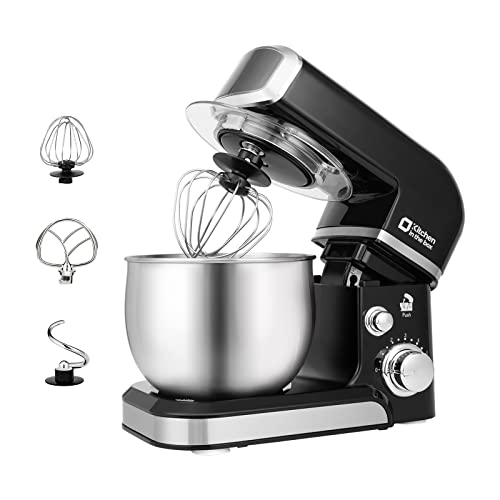
- Lightweight 3.2-quart design
- Six speeds with dough hook
- Four suction cups for stability
Best For: Individuals and couples with limited kitchen space
Best Versatile Stand Mixer

- Durable metal construction
- Ten speeds for varied mixing
- Supports optional attachments
Best For: Home bakers wanting one mixer for multiple kitchen tasks
Best High-Capacity Mixer
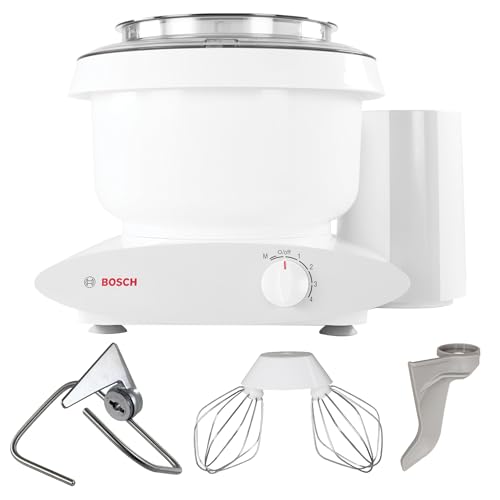
- 6.5-quart dishwasher-safe bowl
- Includes dough hook and extender
- Handles dough and general mixing tasks
Best For: Bakers wanting small- and large-batch versatility
Best Fermentation Features

- Mix, Blend, Ferment, and combined modes
- Seasonal fermentation settings
- Stainless steel bowl and blade
Best For: Home bakers wanting controlled proofing and versatile mixing
Best Compact Proofing Mixer
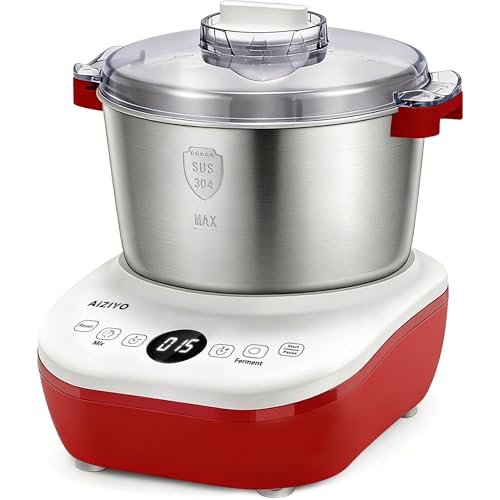
- 5.3-quart stainless steel bowl
- Built-in 77–100°F fermentation mode
- Touch controls and hand-kneading program
Best For: Household bakers needing compact mixing and proofing
Small-Batch Control Pick

- Rated for 300–1,400g of dough
- Mix-pause-mix kneading program
- Fermentation and knob controls
Best For: Home bakers seeking a defined dough range and stable, quieter operation
Beginner-Friendly Proofing Pick
- Mixes and ferments in one appliance
- Smart mix-pause-mix kneading
- Wide opening for adding ingredients
Best For: Beginners who want automated dough preparation and built-in proofing
Best Compact Mixer – Kitchen in the box 3.2Qt Stand Mixer
For shoppers comparing dough kneading machines for small batches, this lightweight 3.2-quart stand mixer is designed for compact kitchens, apartments, and everyday baking. Its six speeds, dough hook, and tilt-head design cover small portions of bread dough, batters, meringues, and whipped cream.
Best For: Individuals, couples, and small kitchens needing a portable mixer for modest batches.
Pros:
- Compact 7-pound design with a 3.2-quart stainless steel bowl.
- Six speeds support dough, batter, whipping, and gentle stirring.
- Includes a dough hook, flat beater, whisk, and anti-splash lid.
- Four suction cups help keep the mixer steady during use.
Cons:
- Its smaller bowl is intended for small batches rather than large-volume baking.
- The 300-watt motor and plastic body may be less suited to demanding, frequent heavy mixing.
This is a practical pick when storage space and portability matter most. It offers more flexibility than a dedicated dough maker, though shoppers regularly preparing large or dense batches may want a larger machine.
Best Automated Dough Maker – Joydeem 7.4Qt Dough Maker
Among dough kneading machines for small batches, this Joydeem model emphasizes hands-off preparation rather than manual speed control. Its timed programs can knead dough in 15 minutes or knead and proof it in 45 minutes, making it useful for bread, pizza, buns, and dumplings.
Best For: Families and home bakers who want timed kneading and fermentation with minimal hands-on work.
Pros:
- Microcomputer controls offer preset timing and automatic programs.
- Fermentation function can combine kneading and proofing in one cycle.
- Large 6.24-liter stainless steel capacity accommodates family-size preparation.
- Removable top cover and dishwasher-safe bowl and blade simplify cleanup.
Cons:
- Its 7.4-quart-class footprint is larger than necessary for truly small batches.
- Only one speed is listed, so it lacks the adjustable control of a stand mixer.
- The stated noise level is 70 dB.
The main appeal here is automation: select a program and let the machine handle kneading and proofing. It is less compelling for shoppers who want compact storage or variable mixing speeds.
Best Versatile Stand Mixer – KitchenAid Classic 4.5-Quart
For buyers seeking dough kneading machines for small batches with room to grow, the KitchenAid Classic combines a 4.5-quart bowl with ten speeds and a durable metal construction. It handles dough alongside general mixing and whipping tasks, while its tilt-head design makes ingredient access straightforward.
Best For: Home bakers who want a durable, multipurpose mixer for small-to-medium recipes.
Pros:
- Durable metal construction with 59 touchpoints around the bowl.
- Ten speeds provide broad control from stirring to whipping.
- Includes a stainless steel bowl, flat beater, dough hook, and wire whip.
- Compatible with more than ten optional attachments.
Cons:
- At 22 pounds, it is substantially heavier than compact alternatives.
- Optional attachments are sold separately.
- The 4.5-quart bowl may be more capacity than needed for very small batches.
This mixer is a strong long-term choice when dough making is only one part of your kitchen routine. Its weight and larger footprint trade portability for sturdy construction, speed control, and attachment compatibility.
Best Small Fermenting Dough Maker – Joydeem 3.7Qt HMJ-A351
This Joydeem HMJ-A351 is one of the more focused dough kneading machines for small batches, with a 3.7-quart bowl and a stated flour range of 200 to 1,100 grams. It adds seasonal fermentation modes, adjustable mixing times, and intermittent kneading for bread, pizza, pasta, sourdough, roti, dumplings, and steamed buns.
Best For: Small-batch bakers who want controlled kneading and built-in fermentation throughout the year.
Pros:
- 3.7-quart capacity supports 200 to 1,100 grams of flour.
- Summer and winter fermentation modes maintain different temperature ranges.
- Mixing and fermentation times can be adjusted in five-minute increments.
- 304 stainless steel bowl and blade, plus suction cups for stability.
Cons:
- It is not speed-adjustable and uses intermittent kneading rather than variable mixer speeds.
- Maximum flour weight for fermented dough is listed as 900 grams.
- Its vertical design may take more counter depth than a compact stand mixer.
The HMJ-A351 is especially useful when consistent proofing is as important as kneading. Its capacity suits smaller household batches, while the seasonal temperature modes add convenience for year-round dough preparation.
Best High-Capacity Mixer – Bosch Universal Plus
For shoppers comparing dough kneading machines for small batches, the Bosch Universal Plus is a versatile stand mixer that can also handle substantial quantities when needed. Its 6.5-quart bowl, bottom-drive design, and included dough hook make it useful for everyday baking, while the wire whips handle smaller tasks such as whipping one egg white.
Best For: Bakers who want one mixer for small jobs, large dough batches, whipping, and optional kitchen attachments.
Pros:
- 6.5-quart BPA-free bowl has an easy-grip handle, removable drive shaft, and dishwasher-safe design.
- Included dough hook and NutriMill dough hook extender support bread-dough preparation.
- Wire whips can handle tasks ranging from one egg white to larger whipping jobs.
- Powerful belt-driven transmission is rated for up to 14 loaves of whole-grain dough or 34 dozen cookies.
Cons:
- Its large capacity may be more than needed for shoppers focused exclusively on small batches.
- The 230-volt specification should be checked for compatibility before purchase.
- Additional attachments are sold separately.
The Bosch stands out for flexibility rather than a small-batch-only focus. It is a strong choice if you want reliable dough mixing alongside whipping, mashing, shredding, and future attachment options.
Best Fermentation Features – Joydeem Electric Dough Maker
The Joydeem Electric Dough Maker is a practical option among dough kneading machines for small batches when adjustable mixing and proofing matter. Its 9.5-quart bowl supports flour quantities from 900 to 2,800 grams, while separate Mix, Blend, Ferment, and Mix + Ferment modes cover dough and filling preparation.
Best For: Home cooks making bread, pizza, roti, dumplings, or sourdough who want built-in seasonal fermentation controls.
Pros:
- Mix mode uses intermittent operation to mimic hand kneading, while Blend mode continuously mixes fillings.
- Winter and Summer fermentation modes provide adjustable temperature ranges for different conditions.
- Mixing time can be set from 5 to 30 minutes, and fermentation time from 5 to 120 minutes.
- 304 stainless steel bowl and blade are durable and easy to clean.
Cons:
- The 9.5-quart capacity may feel oversized for very small dough batches.
- Its recommended flour range starts at 900 grams, which may not suit tiny recipes.
- The 300-watt motor is less powerful on paper than some larger stand mixers.
Choose the Joydeem if proofing control is as important as kneading. Its broad capacity range is useful for household baking, but shoppers making only small recipes should confirm that their usual quantities fit the stated minimum.
Best Compact Proofing Mixer – AIZIYO DoughChief
The AIZIYO DoughChief is a compact choice for shoppers evaluating dough kneading machines for small batches. Its 5.3-quart stainless steel bowl, 200-watt motor, touch controls, and built-in fermentation function are geared toward everyday portions of bread, pizza, pasta, and mochi dough.
Best For: Home bakers who want a relatively compact dough maker with integrated mixing and proofing.
Pros:
- 5.3-quart 304 stainless steel bowl is sized more appropriately for household batches than the larger models in this group.
- Mix-pause-mix programming and an S-shaped blade are designed to simulate hand kneading.
- Fermentation mode maintains a stated 77–100°F range for more consistent proofing.
- Touch controls, time setting, low-noise design, and a removable lid support convenient operation.
Cons:
- The 200-watt motor is the lowest-rated motor among these three products.
- Fermentation requires yeast or fermentation powder.
- The listed noise level is 75 dB, so “low noise” may still be noticeable during operation.
For small household recipes, the DoughChief offers a useful balance of capacity and built-in proofing. Its compact footprint and stainless steel construction are appealing, though users working with especially dense dough may prefer a higher-powered machine.
Large-Batch Fermentation Pick – 7.4-Quart Dough Maker
For shoppers comparing dough kneading machines for small batches, this 7.4-quart model offers room to scale up when you want to prepare bread, pizza, or pastry dough for a family. Its constant-temperature fermentation mode and ingredient-access window add convenience beyond basic kneading.
Best For: Home bakers who want a roomy machine for occasional larger batches, with built-in proofing and touch controls.
Pros:
- 7.4-quart stainless steel capacity suits multiple servings and larger dough recipes.
- Constant-temperature fermentation helps create a consistent proofing environment.
- Top window allows water, seasoning, or other ingredients to be added while mixing.
- Digital display, time setting, and automatic shutoff support more convenient operation.
Cons:
- Its large capacity may be more than needed for very small dough recipes.
- With one speed and 250 watts, it offers less control than a multi-speed mixer.
- The supplied specifications do not identify dishwasher-safe components.
This is a practical choice if fermentation and capacity matter as much as kneading. For consistently tiny batches, however, its 7.4-quart bowl may take up more counter space than necessary.
Small-Batch Control Pick – 6.5-Quart Dough Mixer
Among dough kneading machines for small batches, this 6.5-quart mixer is notable for its stated 300-to-1,400-gram dough range. The S-shaped blade, timed mix-pause-mix program, and manual knob control make it suited to everyday bread, pizza, dumpling, and pastry preparation.
Best For: Bakers who want a machine with a clearly stated dough range, quieter operation, and a hands-on control knob.
Pros:
- Handles approximately 300 to 1,400 grams of dough, covering many small and medium recipes.
- Mix-pause-mix kneading program is designed to simulate hand kneading and build gluten.
- Constant-temperature fermentation operates from 77–95°F (25–38°C).
- Suction-cup base, safety buckles, and low-noise design promote stable operation.
Cons:
- The 6.5-quart bowl may still be relatively large for single-serving dough.
- Fermentation requires yeast or baking powder, so it is not a standalone rising process.
- The bowl is not recommended for dishwasher cleaning, although the dough blade is dishwasher-safe.
The stated minimum dough capacity makes this one of the more directly relevant options for smaller home batches. Its main trade-off is a bowl size that favors flexibility rather than an especially compact footprint.
Beginner-Friendly Proofing Pick – DoughChief 7.4-Quart Mixer
This DoughChief combines kneading and constant-temperature fermentation in one appliance, making it a convenient option among dough kneading machines for small batches. Its smart mix-pause-mix program, wide ingredient opening, and touch panel are designed to simplify bread, pizza, and pasta dough preparation.
Best For: Beginners and home bakers who want automated kneading and proofing with straightforward touch controls.
Pros:
- Mix, ferment, or run both functions for a more streamlined workflow.
- S-shaped blade and mix-pause-mix program help fold and stretch dough evenly.
- Fermentation mode maintains a stated 77–100°F range.
- Wide top opening lets you add flour or water without stopping the mixer.
Cons:
- The 7.4-quart capacity may be oversized for genuinely small, single-loaf batches.
- One speed provides less adjustment than a variable-speed machine.
- At a listed 75 dB, it may not be ideal for shoppers prioritizing very quiet operation.
The DoughChief stands out for combining simple touch operation with mixing and proofing functions. It is best suited to users who value convenience and repeatable fermentation more than a compact small-batch footprint.
How We Picked These Dough Kneading Machines for Small Batches
We focused on machines suited to home bakers who typically prepare one or a few loaves, pizza dough, enriched dough, or similar recipes at a time. The selection includes compact stand mixers and dedicated dough makers in several capacities, with attention to kneading performance, bowl material, controls, fermentation functions, attachments, portability, and cleanup.
Because “small batch” varies by recipe, we treated capacity as one factor rather than an automatic quality score. A smaller bowl may be easier to store and better for modest recipes, while a larger machine can provide flexibility if you occasionally prepare multiple portions.
Quick Comparison
| Best for | Look for | Typical advantage |
|---|---|---|
| Occasional bread or pizza | Compact stand mixer, dough hook, simple controls | Lower storage demands and everyday versatility |
| Frequent dough making | Dedicated dough maker, sturdy bowl, timed programs | More dough-focused operation |
| Proofing convenience | Ferment function and temperature control | Less reliance on a separate warm proofing area |
| Mixed kitchen tasks | Whisks, beaters, and additional attachments | One appliance handles more recipes |
Key Buying Factors for Dough Kneading Machines for Small Batches
Capacity and Minimum Batch Size
Check both advertised bowl capacity and the manufacturer’s recommended dough range. A large bowl is not always ideal for a very small recipe if the hook cannot reach the ingredients effectively. For one loaf or a small pizza batch, compact models may provide better contact and easier handling.
Motor, Speed Control, and Kneading Action
Look for multiple speeds, a dough-specific setting, and a stable base. Dense dough places more strain on a machine than cake batter, so avoid judging performance by wattage alone. A gradual start can also reduce flour splatter.
Fermentation Features
Dedicated dough makers with ferment functions can simplify proofing, especially in cool kitchens. Confirm whether the feature controls time only or also provides meaningful temperature management, and make sure the bowl or lid is easy to clean after fermentation.
Cleanup, Storage, and Noise
Removable bowls, lids, and attachments make frequent use more practical. Consider the machine’s footprint, weight, cord storage, ventilation, and operating noise before choosing a larger model for a small kitchen.
Who Should Buy Which Dough Kneading Machines for Small Batches?
Choose a compact stand mixer if you want one appliance for dough, whipped mixtures, batters, and everyday prep. These are generally the most versatile option for occasional bakers.
Choose a dedicated dough maker if bread and pizza are your main projects and you value timed programs or fermentation support. These models can be especially convenient for repeat batches.
Choose a larger-capacity model if you sometimes scale recipes up, but verify that it still handles your smallest preferred batch. For most shoppers, the best choice is the machine that matches actual recipe size, storage space, and cleaning habits—not simply the model with the biggest bowl.