Choosing the right can sealer can help a small beverage business improve consistency, reduce labor, and package more products per hour. The best machine depends on your can size, daily volume, available power, and preferred level of automation.
We compare 10 commercial and semi-commercial options, including automatic, touchscreen, height-adjustable, and manual models for aluminum and plastic cans. Use the guide below to narrow the list to a practical fit for your operation.
Best 10 Can Sealing Machines for Small Businesses Picks for 2026
Heavy-Duty Pick
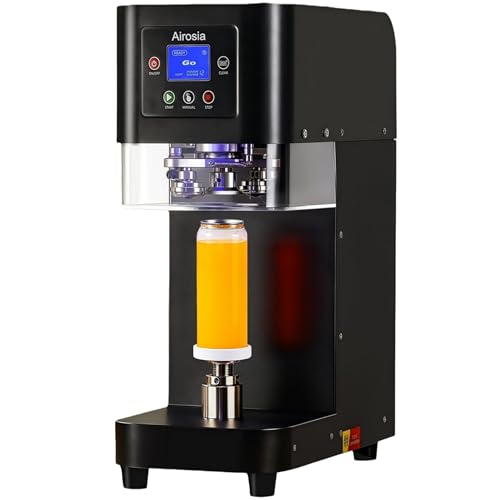
- 270W motor with reinforced steel frame
- Five holders from 250 ml to 650 ml
- Adjustable for 2.4- to 6.7-inch cans
Best For: High-use beverage and dessert businesses needing a stable automatic sealer
Ease-of-Use Pick

- Seals in about three seconds with one touch
- Supports four common can sizes
- Includes holders, sample cans, and accessories
Best For: Small beverage businesses wanting quick, simple automatic operation
Low-Adjustment Pick
Touchscreen Auto-Height Can Sealer

- Automatically detects cup height
- Works with 55 mm PET and aluminum cans
- Includes a three-year warranty
Best For: Busy beverage shops that switch containers and want fewer manual adjustments
Flexible Value Pick

- 370W motor with four- to six-second sealing
- Supports varied can heights and diameters
- Switches between semi-auto and manual modes
Best For: Home brewers and small shops wanting flexible, operator-controlled sealing
Best Automatic 202 Can Sealer

- Automatic lift with one-touch operation
- 2–4-second sealing for beverage orders
- Six adapters for common 202-can sizes
Best For: Beverage shops needing fast, repeatable daily sealing
Best Adjustable Commercial Can Sealer

- Handles cans 2.4–6.7 inches tall
- Digital controls with automatic counting
- Includes five compatible cup holders
Best For: Businesses sealing multiple beverage can heights
Best Manual Can Sealer for Portability
Stainless Steel 202 Manual Sealer

- Operates without electricity
- Adjustable for three common can heights
- Mounting-ready base helps reduce wobble
Best For: Mobile and lower-volume beverage operations
Best Semi-Automatic Option
Height-Adjustable PET & Aluminum Can Sealer

- Five holders cover multiple can heights
- Safety-focused controls and cup counter
- Seals compatible 55 mm #202 lids
Best For: Small beverage businesses needing hands-on control and flexible can sizing
Best Automatic Option
One-Touch Commercial Can Sealer

- Automatic lift system supports varied can heights
- Six adapters fit standard 202 cans
- One-touch operation streamlines workflow
Best For: Commercial beverage shops seeking simpler, repeatable sealing
Best Manual Value
Hand-Rotary 10-Cans-per-Minute Sealer

- No electrical power is required
- Two bases fit different can heights
- Stated speed reaches 10 cans per minute
Best For: Lower-volume shops wanting a simple manual sealing setup
Heavy-Duty Pick – 270W Automatic Can Sealer
For small businesses seeking can sealing machines for small businesses, this automatic model emphasizes motor strength, a reinforced frame, and compatibility with several common 55 mm can sizes. Its adjustable height and included holders make it a practical choice for beverage and dessert operations using different container heights.
Best For: Craft beverage shops, bubble tea stores, food trucks, bakeries, and other businesses needing a sturdy automatic sealer for daily use.
Pros:
- Powerful 270W motor and reinforced steel construction are designed for consistent operation.
- Includes five holders for 250 ml, 330 ml, tall 330 ml, 500 ml, and 650 ml containers.
- Adjustable height supports cans from 2.4 to 6.7 inches.
- Control panel includes a power switch, start button, cup counter, and safety-oriented controls.
Cons:
- At approximately 87 pounds, it is heavy and not especially portable.
- Shorter PET cans may require manual cup-holder adjustment to prevent leaks.
- Designed specifically for #202 cans with a 55 mm diameter, limiting compatibility with other openings.
This is a strong fit when stability and included size options matter more than a compact footprint. Buyers should confirm their can dimensions and be prepared to fine-tune the holder for shorter PET containers.
Ease-of-Use Pick – VEVOR Automatic Can Sealer
This VEVOR model is a straightforward option among can sealing machines for small businesses, using one-touch automatic operation to finish a seal in about three seconds. Its included holders and sample cans make it easier to start working with several common container sizes.
Best For: Beverage counters and small commercial operations that prioritize simple controls, fast cycle times, and multi-size compatibility.
Pros:
- One-touch automatic sealing completes the process in approximately three seconds.
- Supports 250 ml, 330 ml, 500 ml, and 650 ml cans.
- Works with peel-off, pull-tab, and full-open lids for 55 mm openings.
- Includes matching cup holders, sample cans with lids, a wrench, pads, and a user manual.
Cons:
- Its 210W motor is less powerful on paper than some heavier-duty alternatives.
- At 68.8 pounds, it still requires a dedicated workspace.
- The supplied compatibility is centered on 55 mm openings and listed can sizes.
With automatic lifting and a three-step operating process, this VEVOR sealer offers a practical balance of speed and simplicity. It is especially appealing if the included holders match the containers in your product line.
Low-Adjustment Pick – Touchscreen Auto-Height Can Sealer
For operators comparing can sealing machines for small businesses, this commercial model stands out for automatic height detection. It is designed for standard 55 mm openings and can handle both plastic can cups and aluminum cans without changing cup holders, reducing setup work during busy service.
Best For: High-volume milk tea shops, coffee bars, juice stands, sparkling water shops, and dessert businesses that want minimal manual adjustment.
Pros:
- Built-in sensing automatically detects cup height, eliminating the need for cup-pad adjustments.
- Compatible with 55 mm plastic cups and aluminum cans.
- Touchscreen-style commercial operation is designed for daily high-demand use.
- Includes a three-year warranty and stated after-sales support with replacement parts or returns and refunds.
Cons:
- Compatibility is focused on standard 2.17-inch/55 mm openings.
- The supplied package lists the machine and manual but does not list multiple cup holders or sample cans.
- Its automatic features may be unnecessary for very low-volume users.
This is the most convenient choice for businesses frequently switching between compatible container types. The auto-height system and warranty support add value for operators who want to reduce adjustment time and service interruptions.
Flexible Value Pick – Semi-Automatic Can Sealer
This semi-automatic machine offers a more hands-on alternative among can sealing machines for small businesses. Its 370W motor, adjustable support for different can dimensions, and selectable semi-automatic or manual modes suit small beverage shops and home brewers that want flexibility without moving to a fully automatic workflow.
Best For: Home brewers and small beverage shops sealing beer, soda, plastic cans, and metal cans at moderate volumes.
Pros:
- 370W motor completes sealing in approximately four to six seconds.
- Supports cans and bottles with different heights and diameters.
- Offers semi-automatic and manual operating modes.
- LED display counts sealed cans for basic production tracking.
Cons:
- It is semi-automatic/manual rather than fully automatic, so it requires more operator involvement.
- The listed four-to-six-second cycle is slower than the approximately three-second cycle of some automatic models.
- The notes do not specify included interchangeable holders or supported opening sizes.
This model makes sense when container flexibility and operating-mode choice are more important than hands-off throughput. Its 49.6-pound weight is also lower than the other listed machines, which may help with initial placement.
Best Automatic 202 Can Sealer – Mojgar Commercial Can Sealer
For small businesses comparing can sealing machines, the Mojgar Commercial Can Sealer is a strong fit for beverage operations that want quick, repeatable sealing with minimal manual adjustment. Its automatic lift, 2–4-second sealing time, and included adapters support several common 202 (55mm) can sizes.
Best For: Cafés, bubble tea shops, juice bars, breweries, restaurants, food trucks, and beverage startups with regular can-sealing needs.
Pros:
- Automatic one-touch lift helps streamline sealing and improve consistency.
- Creates 360° leak-resistant seams using precision rollers.
- Includes six adapters for can sizes from 8 oz slim through 16.9 oz.
- Reinforced steel construction and a non-slip base support daily commercial use.
Cons:
- Designed for standard 202 (55mm) cans, so other can diameters may not fit.
- Requires a 110-volt electrical connection.
- Its commercial footprint may be more machine than occasional users need.
Choose this model if speed, one-button operation, and broad 202-can compatibility matter more than portability. The stainless-steel, 140-watt design is aimed at dependable beverage-shop production.
Best Adjustable Commercial Can Sealer – Automatic Soda Can Sealer
Among can sealing machines for small businesses, this automatic soda can sealer stands out for its adjustable height range and digital controls. It handles 55mm openings and can accommodate cans from 2.4 to 6.7 inches tall, making it useful for businesses serving drinks in multiple formats.
Best For: Restaurants, bars, food trucks, milk tea shops, hotels, and other beverage businesses needing adjustable automatic sealing.
Pros:
- Automatic lifting and a digital panel simplify operation.
- Adjustable height supports cans from 60 to 170mm.
- Includes five cup holders for several common capacities.
- Automatic counting and dual high-speed motors support production of 10–20 seals per minute.
Cons:
- At about 72 pounds, it is relatively heavy to move.
- Uses a 110V electrical connection.
- Its 55mm mouth specification limits compatibility with other opening sizes.
This is a practical choice when product variety is important. The adjustable design and automatic counting feature can help organize recurring drink production, while the metal construction is suited to a fixed commercial workstation.
Best Manual Can Sealer for Portability – Stainless Steel 202 Manual Sealer
For small businesses that need a simpler setup, this manual can sealing machine avoids electricity and is designed for standard 202 aluminum and PET cans. Its adjustable height accommodates 11 oz, 16.9 oz, and 22 oz formats, making it a useful option for mobile beverage service or lower-volume production.
Best For: Food trucks, pop-up beverage vendors, mobile operators, and small businesses that prefer manual equipment without a power connection.
Pros:
- Manual operation works without electricity.
- Stainless-steel construction is described as rust-resistant and sturdy.
- Adjustable height supports 11 oz, 16.9 oz, and 22 oz cans.
- Pre-drilled base holes allow tabletop mounting for steadier operation.
Cons:
- Manual operation requires more hands-on effort than an automatic sealer.
- The stated speed of up to 10 cans per minute is a reference figure, not a guaranteed rate.
- Compatibility is centered on standard 202 cans with a 5.5cm cap diameter.
This model makes the most sense when portability, independence from electricity, and straightforward operation are priorities. Its 20-pound weight and mounting-ready base offer a practical balance for smaller or mobile setups.
Best Semi-Automatic Option – Height-Adjustable PET & Aluminum Can Sealer
For small businesses seeking can sealing machines, this semi-automatic model offers a practical balance of control and commercial capacity. It includes five holders for several can heights and works with standard #202 lids, though operators should note that the can rotates during sealing.
Best For: Craft breweries, juice bars, coffee shops, food trucks, restaurants, and bars using compatible 55 mm cans.
Pros:
- Includes five holders for 250 ml, 330 ml, tall 330 ml, 500 ml, and 600 ml cans.
- Height adjustment, a cup counter, independent power switch, and stop protection support busy workflows.
- Works with PET and aluminum cans and full-open or pop-top #202 lids.
Cons:
- The rotating sealing action can blend distinct color layers in drinks.
- Compatible only with approximately 55 mm #202 lids; easy-tear lids are not supported.
- Different PET can heights may require cup-holder adjustment.
This is a capable choice when your drink containers and lids match its specifications. Choose a non-rotating automatic model instead if preserving layered beverages is essential.
Best Automatic Option – One-Touch Commercial Can Sealer
Among can sealing machines for small businesses, this automatic commercial model is designed to simplify repetitive beverage packaging. One-touch operation, an automatic lift system, and six interchangeable adapters support a faster workflow for standard 202 (55 mm) aluminum and PET cans.
Best For: Beverage shops and commercial operations sealing soda, sparkling water, coffee, tea, beer, or juice cans.
Pros:
- One-touch controls can reduce operator training and manual effort.
- Automatic lifting adjusts to different compatible can heights.
- Six adapters accommodate standard 202 (55 mm) beverage cans.
- Precision rotating rollers are designed for smooth, consistent, leak-resistant seams.
Cons:
- It is limited to standard 202 (55 mm) can lids.
- The supplied notes do not specify the exact can-height range for the adapters.
This model is a strong fit for businesses prioritizing repeatable, low-effort sealing. Confirm that your cans use the 202 lid format and that the included adapters match your container heights before buying.
Best Manual Value – Hand-Rotary 10-Cans-per-Minute Sealer
For small businesses wanting straightforward can sealing machines without an automated control system, this manual stainless-steel sealer is a compact alternative. Its hand crank, two interchangeable bases, and stated speed of up to 10 cans per minute suit lower-volume beverage service and occasional production.
Best For: Homes, bars, cafés, snack bars, restaurants, beverage stores, fast-food restaurants, and dessert shops using 55 mm PET or aluminum cans.
Pros:
- Manual operation avoids reliance on an electrical power source.
- Two bases support can heights of approximately 4.53 and 6.61 inches.
- Stainless-steel construction is described as wear-, corrosion-, and rust-resistant.
- Can seal up to 10 cans per minute according to the supplied specifications.
Cons:
- Manual cranking requires more operator effort than automatic models.
- It supports a 55 mm (2.17-inch) sealing diameter, limiting container compatibility.
- Only two height bases are included.
This is a sensible pick for businesses that value simple setup and mechanical operation over automation. It is best suited to modest throughput where the operator can manage the hand-crank workflow.
How We Picked the Best Can Sealing Machines for Small Businesses
We focused on machines suited to real small-business workflows rather than occasional home use. Key considerations included automation level, compatibility with aluminum and plastic cans, adjustable sealing height, stated motor power, compatibility with common 202 cans, and the amount of operator effort required.
We also considered how easily each type could fit different production environments, from cafés and mobile beverage vendors to breweries, food stalls, and small-scale packaging operations. Because specifications and included accessories can vary, verify dimensions, voltage, and replacement-part availability before ordering.
Quick Comparison
| Machine type | Best for | Main advantage | Potential limitation |
|---|---|---|---|
| Automatic | Higher-volume production | Less manual labor and more consistent cycles | Usually costs more and needs setup space |
| Touchscreen automatic | Repeatable commercial workflows | Convenient controls and easier adjustments | More electronics to maintain |
| Semi-automatic | Growing businesses | Balances price, speed, and operator control | Requires loading or activation by hand |
| Manual | Low-volume or mobile use | Lower purchase cost and simpler operation | Slower and more dependent on operator technique |
Key Buying Factors for Can Sealing Machines for Small Businesses
Can Compatibility
Confirm the machine supports your exact can material, diameter, and height. A model advertised for 202 cans may fit approximately 55 mm containers, but that does not guarantee compatibility with every PET, aluminum, tin, or specialty can. Check the manufacturer’s supported size range and whether changeover parts are included.
Production Volume and Speed
Estimate your busiest realistic shift, not just your average day. Automatic machines are generally better for continuous beverage production, while semi-automatic models can be a sensible compromise for businesses that need flexibility without the cost of a fully automated line.
Sealing Consistency
A dependable seal protects carbonation, freshness, and presentation. Look for adjustable height, stable can positioning, and clear instructions for setting pressure and roller alignment. Consistency matters especially when products will be transported or stored.
Controls, Power, and Maintenance
Check voltage, wattage, footprint, noise, and ventilation requirements before purchase. Touchscreen controls can simplify repeated settings, while manual machines may be easier and cheaper to maintain. Ask whether replacement rollers, dies, gaskets, and other wear parts are available.
Workspace and Operator Safety
Measure counter and storage space, allowing room for loading cans and cleaning. Choose a stable machine with accessible emergency controls or a clear shutoff procedure. Follow the operating manual and avoid exceeding the recommended container sizes or cycle rate.
Who Should Buy Which Can Sealing Machines for Small Businesses?
Choose an automatic model if you seal beverages regularly, need repeatable output, and want to reduce hands-on labor. These are typically the strongest choice for established cafés, breweries, beverage brands, and busy food-service operations.
Choose a touchscreen or height-detection model if multiple employees will operate the machine or you frequently switch between compatible can sizes. Easier controls can reduce setup errors, though the extra technology may increase cost.
Choose a semi-automatic model if your business is growing and you want better throughput than a manual unit without committing to a fully automated system. This category often suits seasonal vendors and small production rooms.
Choose a manual sealer if volume is modest, portability and low upfront cost matter most, or you are testing a new canned product. Before buying, confirm that the slower workflow and operator involvement match your expected demand.