Making fresh apple cider at home does not require a full-size farm press. The best cider presses for small kitchens combine manageable capacities with sturdy baskets, efficient handles, and designs that are easier to store between batches.
This roundup compares 10 manual fruit presses and crusher-style tools suited to home cider making, small-batch wine, and seasonal kitchen use. Use the buying guide below to match press capacity, construction, and footprint to your available space and typical batch size.
Best 10 Cider Presses for Small Kitchens Picks for 2026
Best Compact Crusher
7L Manual Fruit and Apple Crusher

- 7-liter hopper for home batches
- Uniform pulp for easier pressing
- Stainless steel and iron construction
Best For: Preparing apples and other fruit for a separate cider press
Best Large-Batch Press
4.75-Gallon Solid Wood Fruit Wine Press

- 18-liter pressing capacity
- Beechwood basket with filter bags
- Screw mechanism for efficient extraction
Best For: Large seasonal batches and family-scale juice making
Best Stainless Steel Option
0.8-Gallon Fruit Press with T-Handle

- Small-batch 0.8-gallon capacity
- Stable triangular frame
- Removable stainless steel parts
Best For: Compact kitchens and easy-clean home pressing
Best Small Wooden Press

- Compact 1.6-gallon capacity
- Beechwood basket with heavy-duty stand
- Built-in spout for juice collection
Best For: Small home batches of apples, grapes, and berries
Heavy-Duty Stainless Steel Pick

- Stainless steel build with heavy-duty cross-beam
- Large barrel for efficient fruit pressing
- Hose-rinse cleanup design
Best For: Home brewers handling larger batches
Traditional Wood-Basket Pick
1.6-Gallon Classic Cider Press

- Compact capacity for 6 to 8 pounds of fruit
- Extended handle designed for easier pressing
- Includes one filter bag
Best For: Families and occasional small-batch pressing
Compact Countertop Pick
0.44-Gallon Stainless Steel Press

- Small 1.65-liter capacity for modest batches
- Stainless steel construction and T-handle
- Includes two filter bags
Best For: Small households with limited storage space
Heavy-Duty Pick
2.38-Gallon Stainless Steel Press

- Cast iron base with stainless steel basket
- Swing-open beam and fully assembled design
- Presses apples, grapes, berries, and more
Best For: Durable home cider pressing with added stability
Best Simple Pick
VEVOR 0.88-Gallon Manual Press

- Small 0.88-gallon inner barrel
- Disassembles for easier cleaning
- Includes two filter screens
Best For: Portable small-batch cider and juice pressing
Large-Batch Traditional Pick
SQUEEZE master 4.75-Gallon Press
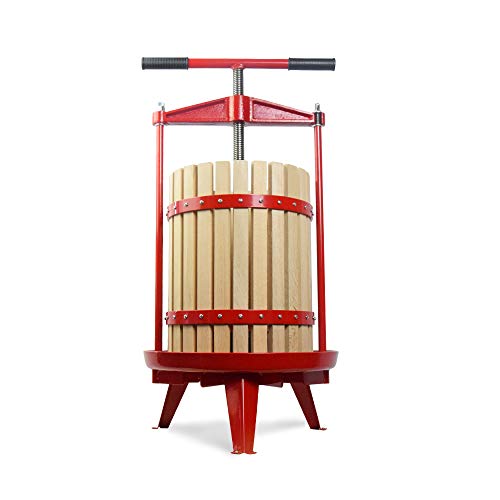
- Presses 22 to 33 pounds per batch
- Spiral T-handle supports easier pressing
- Includes one filter bag
Best For: Parties and frequent high-volume home pressing
Best Compact Crusher – 7L Manual Fruit and Apple Crusher
For shoppers comparing cider presses for small kitchens, this manual crusher is a practical first step for turning apples, pears, grapes, and other fruit into press-ready pulp. Its 7-liter hopper offers useful batch capacity while the table-mount design helps keep it secure during operation.
Best For: Home cider makers who need a compact fruit crusher to prepare produce before pressing.
Pros:
- 7-liter hopper can process sizable batches of fruit.
- Produces uniform pieces that are easier to press with minimal waste.
- Food-grade 304 stainless steel and a reinforced iron frame support durability.
- Manual operation requires no electrical power.
Cons:
- It is a crusher, not a complete juice press.
- Hand washing is recommended.
- Fruit should be cut or prepared as needed before crushing.
This is a strong companion tool for a small-kitchen cider setup, particularly when consistent pulp matters more than having an all-in-one appliance. Pair it with a compatible press for complete juice extraction.
Best Large-Batch Press – 4.75-Gallon Solid Wood Fruit Wine Press
Among cider presses for small kitchens, this 4.75-gallon manual model suits households that want substantial output from seasonal fruit. Its beechwood basket, filter bags, and progressive screw mechanism are designed for pressing crushed fruit efficiently.
Best For: Families, gatherings, and serious home users who have room for a larger manual press.
Pros:
- 18-liter capacity handles larger batches.
- Solid beechwood basket has a smooth, burr-free surface.
- Extended handle and screw mechanism make manual pressing straightforward.
- Includes two food-grade filter bags.
Cons:
- At 30.9 pounds and nearly 28 inches tall, it is less convenient for very small kitchens.
- Hard fruit must be crushed before pressing.
- Hand washing is required.
This press offers excellent capacity for home cider production, but its footprint is better suited to a utility area, garage, or spacious countertop than a tightly packed kitchen.
Best Stainless Steel Option – 0.8-Gallon Fruit Press with T-Handle
For cider presses for small kitchens, this compact stainless steel model emphasizes manageable batches, stable operation, and easy cleanup. Its dual-barrel design encloses the pressing area, while the outlet and silicone hose help direct juice into a container.
Best For: Small-batch home users who prioritize rust-resistant materials and straightforward cleanup.
Pros:
- Compact 0.8-gallon outer barrel and 0.7-gallon inner basket suit smaller batches.
- Stainless steel and aluminum alloy construction resist rust and wear.
- Triangular base and three columns improve stability.
- Removable parts and smooth surfaces simplify rinsing.
Cons:
- Its capacity is limited compared with larger fruit presses.
- The supplied notes do not specify a complete overall dimension.
- Parts should be dried after washing to help prevent rust.
This is a sensible choice when countertop space and batch size matter most. The enclosed barrel and hose also make juice collection tidier than an open pressing setup.
Best Small Wooden Press – 1.6-Gallon Manual Cider Maker
For anyone seeking cider presses for small kitchens, this 1.6-gallon beechwood model offers a compact manual format for apples, grapes, and berries. Its built-in pour spout and small footprint make it convenient for occasional home juice or wine making.
Best For: Home users who want a compact wooden press for modest fruit batches.
Pros:
- 1.6-gallon capacity fits small-batch pressing.
- Compact 7.48-by-7.48-inch footprint and 12.99-inch height suit limited space.
- Solid red beech basket is designed for moisture and wear resistance.
- Built-in pour spout supports easier juice collection.
Cons:
- Crushed fruit is required before loading.
- Manual pressing is slower for large harvests.
- Hand washing is recommended.
This press balances a small footprint with useful capacity for everyday home batches. The option to secure the feet can also help improve stability during pressing.
Heavy-Duty Stainless Steel Pick – 3.69-Gallon Fruit Wine Press
For shoppers comparing cider presses for small kitchens, this 3.69-gallon stainless steel model offers substantial capacity and a sturdy manual design. Its cross-beam and screw mechanism are suited to pressing apples, grapes, berries, and other fruit for juice, cider, or wine.
Best For: Home brewers and serious home users who want a durable, higher-capacity press for repeated batches.
Pros:
- Durable stainless steel construction with a heavy-duty cross-beam.
- Large barrel and screw mechanism support efficient juice extraction.
- Works with apples, grapes, berries, and other fruits.
- Can be rinsed with a hose for easier cleanup between batches.
Cons:
- At 19 x 19 x 16 inches and 33.1 pounds, it needs considerable storage space.
- The 3.69-gallon capacity may be more than casual small-batch users need.
This is the most robust option of the three, but its size and weight make it less countertop-friendly. Choose it when durability and batch capacity matter more than compact storage.
Traditional Wood-Basket Pick – 1.6-Gallon Classic Cider Press
This classic wooden press is a practical choice for cider presses for small kitchens when you want a portable, manual option with traditional styling. Its 1.6-gallon size can handle about 6 to 8 pounds of fruit at a time and includes a filter bag for pressing apples, grapes, and more.
Best For: Families, small gatherings, and users who prefer a compact traditional-style press for moderate batches.
Pros:
- Compact 1.6-gallon capacity is suited to smaller batches.
- Extended pole handle and staged pressing design are intended to reduce effort.
- Thick press plate and broad pressing area support thorough extraction.
- Includes one free filter bag and can press fruit, wine, pomace, and honeycomb.
Cons:
- Assembly is required.
- Wood construction may require more care than an all-stainless-steel press.
- The 6-to-8-pound fruit capacity is less suitable for large batches.
With its portable format and moderate capacity, this press balances traditional appearance with useful small-batch versatility. It is a better fit for occasional home cider making than high-volume processing.
Compact Countertop Pick – 0.44-Gallon Stainless Steel Press
Among cider presses for small kitchens, this 0.44-gallon manual press is the easiest fit for limited counter and storage space. Its stainless steel barrels, T-handle, and two included filter bags support small servings of juice, cider, wine, puree, and other pressable foods.
Best For: Small households and beginners who prioritize a compact, easy-to-clean press for modest batches.
Pros:
- Compact 1.65-liter capacity suits small-batch pressing.
- Stainless steel pressing plate, barrels, base, and support frame offer sturdy construction.
- Includes two food-grade filter bags.
- Disassembles for cleaning and is described as dishwasher-compatible in the product notes.
Cons:
- The 0.44-gallon capacity limits the amount of fruit pressed per batch.
- At 19.57 inches tall, it may still need dedicated vertical storage.
- The notes also list hand washing as the care instruction, so dishwasher use may require checking the manufacturer guidance.
This is the most space-conscious choice for occasional pressing, especially when easy cleanup and stainless steel construction are priorities. Its small capacity is the main trade-off for a kitchen-friendly footprint.
Heavy-Duty Pick – 2.38-Gallon Stainless Steel Press
For shoppers comparing cider presses for small kitchens, this 2.38-gallon model offers a sturdy manual setup for pressing prepared apples, grapes, berries, and other produce. Its stainless steel basket, cast-iron base, and swing-open beam prioritize stability and straightforward operation, though its 35.4-pound weight may be more than some compact spaces require.
Best For: Home cider makers who want a durable, ready-to-use press for small-to-medium batches.
Pros:
- Heavy-duty cast iron and stainless steel construction.
- Swing-open cross beam makes filling more convenient.
- Arrives fully assembled, with foot holes for added stability.
- Can handle apples, grapes, berries, tomatoes, and rhubarb.
Cons:
- At 35.4 pounds, it is less convenient to move or store than lighter countertop options.
- Requires pre-shredded or otherwise prepared fruit.
- Hand-wash care and drying are recommended.
This is a sensible choice when durability and stability matter more than portability. Its capacity and solid construction suit dedicated home pressing, but smaller kitchens should account for its weight and storage footprint.
Best Simple Pick – VEVOR 0.88-Gallon Manual Press
This VEVOR model is a practical option for cider presses for small kitchens, with a 0.88-gallon inner barrel and portable manual design. The stainless steel components are built for repeated use, while the disassemblable barrels make cleanup easier after pressing prepared fruit or vegetables.
Best For: Small-batch cider and juice makers who value portability and easier cleanup.
Pros:
- Compact 0.88-gallon inner capacity suits smaller batches.
- Food-grade stainless steel press plate and barrels resist wear and corrosion.
- Inner and outer barrels can be disassembled for cleaning.
- Includes two food-grade filter screens and supports multiple uses.
Cons:
- Hard fruits such as apples and carrots must be mashed before pressing.
- Grapes and oranges need to be peeled and cut into small pieces.
- Manual pressing still requires hand effort.
Among compact choices, this press stands out for its portable size and cleaning-friendly construction. Its preparation requirements are important, but they also make it a manageable fit for occasional small-batch kitchen use.
Large-Batch Traditional Pick – SQUEEZE master 4.75-Gallon Press
Although larger than many cider presses for small kitchens, this traditional wood-basket model may suit shoppers who need higher output for gatherings or frequent pressing. Its 4.75-gallon capacity can handle 22 to 33 pounds of fruit at once, while the spiral T-handle design is intended to make pressing more efficient.
Best For: Families, parties, and home operations that prioritize batch capacity over compact storage.
Pros:
- Large 4.75-gallon capacity for substantial fruit batches.
- Designed to press approximately 22 to 33 pounds of fruit at a time.
- Spiral T-handle and phased pressing help reduce operating effort.
- Includes a filter bag and supports fruit, pomace, and honeycomb pressing.
Cons:
- Its 40.1-inch height and 11-inch footprint may be difficult to fit in a small kitchen.
- Wood construction requires hand-wash care.
- Large capacity may be excessive for occasional small batches.
This press is best viewed as a capacity-first alternative rather than a truly compact countertop tool. Choose it when processing volume matters and you have suitable storage space for its tall traditional design.
How We Picked the Best Cider Presses for Small Kitchens
We focused on manual presses and related fruit-processing tools that can work in a home setting rather than commercial production. The selection covers capacities from less than half a gallon to 4.75 gallons, giving shoppers options for occasional juice making and larger seasonal batches.
We also considered basket and frame materials, handle design, stability, portability, and the practical demands of loading, pressing, pouring, and cleaning. Stainless steel is useful for corrosion resistance and straightforward sanitation, while wood baskets can provide a traditional pressing experience but require more careful drying and maintenance.
Quick Comparison
| Capacity range | Best for | What to expect |
|---|---|---|
| 0.44–0.88 gallon | Very small batches and limited storage | Compact footprint, but more frequent loading |
| 0.8–1.6 gallons | Typical home use | Good balance of capacity, control, and portability |
| 2.38–3.69 gallons | Seasonal apple or grape pressing | Fewer loads, with greater counter or floor-space demands |
| 4.75 gallons | Larger household batches | Higher output, but heavier and less convenient to store |
Key Buying Factors for Cider Presses for Small Kitchens
Capacity and Available Space
Choose the smallest basket that comfortably handles your usual harvest. A compact press is easier to carry and store, while a larger model reduces loading time. Remember to measure both the storage area and the working space needed to turn the handle.
Construction and Stability
Look for a rigid frame, a secure cross-beam, and a base that will not shift under pressure. Stainless steel components are generally easy to clean and resist moisture. Solid wood baskets can be durable and attractive, but they should be washed appropriately and dried completely.
Pressing Mechanism
A T-handle or long lever can improve control and reduce effort. Check whether the handle provides enough clearance for comfortable operation. A crusher or scratter may be useful if you need to break whole apples into pulp before pressing; a press alone is not a substitute for proper fruit preparation.
Cleanup and Food Safety
Fresh juice equipment needs prompt cleaning after use. Favor removable parts, accessible surfaces, and materials that do not trap pulp. Avoid leaving juice or damp wood sitting overnight, and follow the manufacturer’s care instructions.
Who Should Buy Which Cider Presses for Small Kitchens?
Choose a sub-one-gallon press if you have limited cabinet space, make juice occasionally, or want to test small batches. Models around 1.6 gallons are a practical middle ground for most households. Move up to 2.38–3.69 gallons if you process fruit from a garden or orchard and want fewer loading cycles.
The 4.75-gallon presses suit experienced home makers with adequate storage and a stable work area. If portability and versatility matter most, a smaller stainless steel press or crusher-style tool may be easier to manage. Before buying, confirm the press’s dimensions, included components, and whether you need a separate grinder, collection container, or filtering setup.