Fresh apple juice, hard cider, and homemade wine start with the right press. These cider presses range from compact manual baskets for occasional batches to high-capacity hydraulic models for larger harvests.
We compare capacity, construction, pressing method, ease of use, and cleanup so you can choose a practical press for your fruit, available space, and production goals.
Best 10 Cider Presses Picks for 2026
Best Heavy-Duty Pick
3.69-Gallon Stainless Steel Fruit Press
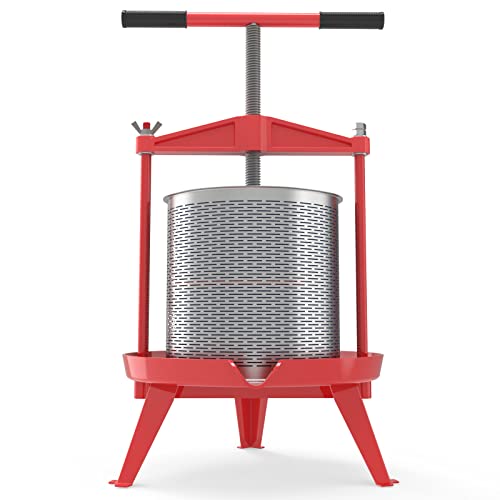
- 14-liter stainless steel basket
- High-pressure Acme screw with T-handle
- Removable basket for easier cleanup
Best For: Home cider, fruit wine, and orchard pressing
Best Traditional Workhorse
American Harvester Double-Tub Cider Press

- Integrated apple grinder and press
- Hard maple and cast iron construction
- Designed for two-person, high-volume operation
Best For: Orchard harvests and family-scale pressing
Best High-Capacity Hydraulic Pick
10.7-Gallon Stainless Steel Press

- 40-liter capacity for larger batches
- Uses household water pressure
- Includes filter bag and splash guard
Best For: Catering, juice shops, and small wine producers
Best Easy-Clean Value
VEVOR 3.69-Gallon Manual Cider Press

- 14-liter capacity for home batches
- Swing-open crossbeam simplifies loading
- Includes two filter bags and removable basket
Best For: Home cider making and small-farm pressing
Classic Hand-Crank Pick

- 18-liter wood basket for home batches
- Includes crusher for hard produce
- Manual, portable, and rust-resistant
Best For: Traditional home cider making without electricity
Easy-Clean Countertop Pick

- 3.17-gallon capacity for family batches
- Includes two food-grade filter bags
- Disassembles for easier cleaning
Best For: Countertop juice, cider, and wine pressing
Large-Batch Power Pick

- 10.6-gallon capacity for harvests
- 5-ton hydraulic pressing force
- 304 stainless steel juice-contact parts
Best For: Orchards and high-volume seasonal pressing
High-Capacity Hydraulic Press
5.8-Gallon Stainless Steel Cider Press

- Food-grade 304 stainless steel construction
- Hydraulic jack reduces manual effort
- Large barrels for higher-volume batches
Best For: High-volume cider and fruit pressing
Traditional Wooden Press
18-Liter Hand-Operated Cider Press

- Solid wood basket with T-handle
- Presses up to 22–33 pounds at a time
- Includes one filter bag
Best For: Traditional home fruit pressing
Compact Heavy-Duty Press
2.38-Gallon Stainless Steel Cider Press

- Cast iron base with stainless steel basket
- Swing-open beam speeds loading
- Fully assembled for home use
Best For: Small-batch cider and juice making
Best Heavy-Duty Pick – 3.69-Gallon Stainless Steel Fruit Press
For shoppers comparing cider presses for home orchards, brewing, or harvest-season use, this 14-liter model combines a food-grade stainless steel basket with a heavy-duty manual screw. Its large T-handle is designed to create pressing force with less effort, while the removable basket simplifies cleanup.
Best For: Home cider and fruit-wine making, small orchards, and users who want a durable stainless steel basket.
Pros:
- 14-liter (3.7-gallon) capacity for larger batches.
- Heavy-duty T-handle and Acme screw help produce high pressure with less effort.
- Food-grade stainless steel basket and powder-coated frame are designed to resist rust and corrosion.
- Detachable basket makes hand washing easier.
Cons:
- Manual operation requires physical effort.
- Hand-wash care may take more time after pressing.
- Its 14-liter capacity may be limiting for larger-scale production.
This is a practical choice among cider presses when corrosion resistance, straightforward operation, and a moderately large basket matter more than powered convenience.
Best Traditional Workhorse – American Harvester Double-Tub Cider Press
This American Harvester stands out among cider presses for its combined grinding and squeezing design. Its Apple Eater grinder prepares apples to a fine texture, while the double-tub setup and two-person operation are intended for high-volume seasonal pressing.
Best For: Families, orchards, and groups seeking a traditional press for substantial harvest-day batches.
Pros:
- Combines apple grinding and juice pressing in one setup.
- Hard maple and cast iron construction.
- Double-tub design supports a two-person workflow.
- Claimed capacity of up to 50 gallons in an afternoon with two operators.
Cons:
- Two-person operation may be less convenient for solo users.
- Its traditional construction may require more space and setup than a compact manual press.
- The supplied notes do not specify basket capacity or detailed cleanup instructions.
Choose this model if your priority is throughput and a classic grinder-and-press workflow. It is better suited to harvest-day teamwork than to occasional small-batch cider making.
Best High-Capacity Hydraulic Pick – 10.7-Gallon Stainless Steel Press
For buyers seeking cider presses with more capacity and less manual exertion, this 40-liter hydraulic model uses ordinary household water pressure to drive the pressing mechanism. It includes a filter bag and splash guard, and its high-pressure design is intended to improve juice yield even when the basket is not completely full.
Best For: Families, catering operations, juice shops, hotels, and small wine producers needing larger batches.
Pros:
- 10.7-gallon (40-liter) capacity for substantial pressing sessions.
- Connects to a standard domestic water supply to reduce muscle and electrical effort.
- Designed for rapid pressing and a short juice flow distance.
- Food-grade materials and a maximum 3-bar pressure setting support controlled operation.
Cons:
- Requires access to a suitable garden hose and domestic water supply.
- Larger 46.8-pound package may be less convenient to move than a smaller press.
- More appropriate for larger batches than occasional countertop-style use.
This is a strong fit when capacity and hydraulic assistance are more important than portability. Its water-powered operation can make repeated pressing less demanding, provided you have the required hookup.
Best Easy-Clean Value – VEVOR 3.69-Gallon Manual Cider Press
This VEVOR model is one of the more approachable cider presses for home users who want a 14-liter capacity without a complicated power system. It pairs a swing-open cast iron crossbeam with a manual spiral mechanism, two food-grade filter bags, and a removable 304 stainless steel basket.
Best For: Families, home brewers, small farms, and users who value straightforward loading and cleanup.
Pros:
- 3.69-gallon (14-liter) capacity suits family gatherings and small production.
- Swing-open crossbeam makes loading the basket more convenient.
- Includes two food-grade filter bags.
- Removable 304 stainless steel basket supports easier cleaning.
Cons:
- Manual pressing still requires turning the handle.
- Best results may require pre-cutting or pre-crushing fruit.
- Food-grade lubricant is recommended for non-food-contact metal parts to help prevent corrosion.
With a stable triangular base, practical loading design, and removable basket, this press offers a balanced option for home cider makers. Plan on crushing fruit first for more efficient extraction.
Classic Hand-Crank Pick – Wood-Basket Cider Press
This cider press combines an 18-liter solid wood basket with a stainless steel fruit crusher, giving home users a manual setup for processing apples, pears, peaches, carrots, and other hard produce. Its extended hand shank and geared crushing design are intended to reduce effort while improving juice extraction.
Best For: Home users who want a versatile manual cider and fruit press with a large basket and separate crusher.
Pros:
- 4.75-gallon capacity suits larger home batches.
- Stainless steel construction is rust resistant and food grade.
- Crusher is designed for hard fruits and vegetables.
- Manual operation works without a power supply.
Cons:
- Hand washing is recommended for care.
- Manual pressing requires physical effort.
- The wood basket may require more attention than an all-stainless design.
The combination of crushing and pressing makes this a practical choice for traditional, off-grid cider making. Choose it if you value portability and broad produce compatibility over powered operation.
Easy-Clean Countertop Pick – 12L Stainless Steel Press
This 12-liter stainless steel cider press is a compact manual option for juice, wine, and other liquid-extraction tasks. Its thickened pressing plate, filter bags, non-slip handle, and disassemblable barrels are geared toward straightforward family-size processing and cleanup.
Best For: Families and small gatherings needing a stable countertop press that can handle juice, cider, wine, and other foods.
Pros:
- 3.17-gallon capacity works well for family-size batches.
- Stainless steel contact parts resist corrosion and wear.
- Includes two food-grade filter bags.
- Parts can be disassembled for cleaning, and the notes indicate dishwasher compatibility.
Cons:
- Fruit should be precut for better pressing results.
- Manual operation is slower and more labor-intensive than hydraulic pressing.
- Hand washing is listed in the care instructions despite the dishwasher-cleaning note.
With its manageable capacity and cleaning-focused design, this press is a convenient middle ground for regular household use. It is less suited to very large harvests than a high-capacity hydraulic model.
Large-Batch Power Pick – 40L Hydraulic Press
For substantial harvests, this 40-liter hydraulic cider press uses a 5-ton jack to apply high pressure in larger batches. Juice-contact components are made from AISI 304 stainless steel, while the adjustable tray height and pivoting beam help accommodate loading and different container sizes.
Best For: Orchard owners, harvest-season processing, and users who need high capacity for fruit, herbs, nut milks, honey, or similar products.
Pros:
- 10.6-gallon capacity supports large-volume pressing.
- Hydraulic jack provides up to 5 tons of pressure.
- AISI 304 stainless steel covers the juice-contact parts.
- Adjustable tray height and 90-degree beam improve loading and container compatibility.
Cons:
- At 85 pounds, it is substantially less portable than smaller manual presses.
- Its larger frame requires more storage space.
- The supplied notes do not specify included filter bags.
This is the strongest choice for users prioritizing throughput and pressing force over compactness. Its large footprint and weight make it better suited to a dedicated processing area than occasional countertop use.
High-Capacity Hydraulic Press – 5.8-Gallon Stainless Steel Cider Press
For shoppers comparing cider presses, this model stands out for its food-grade 304 stainless steel construction and hydraulic-assisted extraction. Its larger capacity and reinforced frame make it suited to processing substantial batches of apples and other fruit.
Best For: Home or small commercial users who want a high-capacity press with reduced manual effort.
Pros:
- Food-grade 304 stainless steel is rust-proof and hygienic.
- Hydraulic jack delivers up to 6,613.87 pounds of pressure.
- 5.81-gallon outer barrel and 2.91-gallon filter barrel support larger batches.
- Triangular brackets and thickened materials improve stability.
Cons:
- Its larger capacity may be more than needed for occasional, small-batch pressing.
- The hydraulic design may be less traditional than a simple hand-operated press.
This is a practical choice when throughput, stability, and easy juice extraction matter more than a compact footprint. It can handle cider, wine, and assorted fruit-processing tasks.
Traditional Wooden Press – 18-Liter Hand-Operated Cider Press
This traditional-style option is among the cider presses designed for hands-on fruit juicing. It combines an 18-liter solid wood basket with a T-shaped handle and phase-in pressing action, offering a manual setup for apples, grapes, and other produce.
Best For: Families, small eateries, and home users who prefer a classic manual fruit press for batches of roughly 22 to 33 pounds.
Pros:
- T-shaped handle is designed to make pressing easier.
- Thick press plate and broad pressing area aim to improve juice yield.
- 18-liter capacity supports moderate-size batches.
- Includes one filter bag for cleaner juice processing.
Cons:
- Manual operation requires user effort.
- Wood construction requires hand washing and care.
- The supplied notes list both red in the title and blue in the product details, so verify the color before ordering.
With its vintage appearance and broad fruit compatibility, this press suits buyers who value traditional operation and versatility. It can also be used for materials such as pomace and honeycomb, according to the supplied specifications.
Compact Heavy-Duty Press – 2.38-Gallon Stainless Steel Cider Press
Among compact cider presses, this model emphasizes durability and straightforward setup. Its cast iron base and legs pair with a stainless steel basket, while the swing-open cross beam allows fruit to be loaded quickly for home juice making.
Best For: Home brewers and DIY cooks who need a stable, ready-to-use press for smaller batches.
Pros:
- Cast iron base and legs provide a heavy-duty foundation.
- Stainless steel basket offers a durable pressing surface.
- Swing-open cross beam makes filling more convenient.
- Arrives fully assembled, with foot holes to improve stability.
Cons:
- Its 2.38-gallon capacity is smaller than larger batch presses.
- Manual pressing requires physical effort.
- Non-food-contact parts require lubrication to help prevent corrosion.
This is a sensible fit for buyers who want a sturdy, relatively compact press without an assembly project. It handles pre-shredded apples, grapes, berries, tomatoes, and rhubarb for varied homemade juices.
How We Picked These Cider Presses
We focused on the features that matter most during harvest: basket capacity, frame stability, juice-contact materials, pressing power, operating effort, and cleanup. The selection includes compact 2.38- to 3.69-gallon models, mid-size 4.75- to 5.8-gallon presses, and 10.6- to 10.7-gallon hydraulic options.
We also considered whether a press includes a filter bag, splash guard, grinder, or crusher. These accessories can affect the total setup cost and determine whether you can process prepared fruit immediately or need separate equipment.
Quick Comparison
| Best For | Recommended Type | Why It Fits |
|---|---|---|
| Small batches and limited storage | 2.38- to 3.69-gallon manual press | Compact, affordable, and easier to move |
| Regular home cider making | 4.75- to 5.8-gallon basket press | Balanced capacity and manageable operation |
| Large harvests | 10.6- to 10.7-gallon hydraulic press | Higher capacity with less manual force |
| All-in-one fruit processing | Press with grinder or crusher | Combines preparation and juice extraction |
Key Buying Factors for Cider Presses
Capacity and Batch Size
Choose a basket that matches the amount of fruit you can process at one time. A smaller press is suitable for backyard trees, testing recipes, or occasional juice making. Larger baskets reduce the number of cycles but require more storage space and stronger support.
Manual or Hydraulic Operation
Manual T-handle and cross-beam presses are straightforward and do not require power, but they demand more physical effort. Hydraulic models apply greater, more consistent pressure and are better for heavy harvests or frequent use.
Construction and Juice Safety
Stainless steel juice-contact parts are easy to clean and resist corrosion. Wooden baskets can offer traditional appearance and effective drainage, but they need careful drying and maintenance. Look for a stable frame, reinforced handles, and a design that will not shift under pressure.
Fruit Preparation and Cleanup
Most presses work best with fruit that has already been crushed or ground. A built-in grinder or included crusher can simplify the workflow. Filter bags help contain pulp, while splash guards and removable components make cleanup less tedious.
Who Should Buy Which Cider Presses?
Choose a compact manual press if you have limited storage, make small batches, or want a simple tool for apples, grapes, and other soft fruit. Choose a mid-size basket press for the best balance of capacity, cost, and effort in typical home cider production.
Choose a hydraulic press when you process substantial harvests, want more pressing force, or need to reduce repetitive manual work. If you want a streamlined setup, select a model paired with a grinder or crusher. Before buying, confirm the basket dimensions, required fruit preparation, available workspace, and how easily the parts can be washed and dried.