Making bread at home is easier when a machine handles the repetitive mixing and kneading. The best compact dough kneading machines save counter space while still offering enough capacity for everyday loaves, pizza dough, and enriched recipes.
Our selection includes small stand mixers and dedicated electric dough makers in several capacities, so you can match the machine to your baking frequency, available workspace, and preferred level of automation.
Best 10 Compact Dough Kneading Machines Picks for 2026
Best Compact Stand Mixer
Kitchen in the box 3.2Qt Mixer
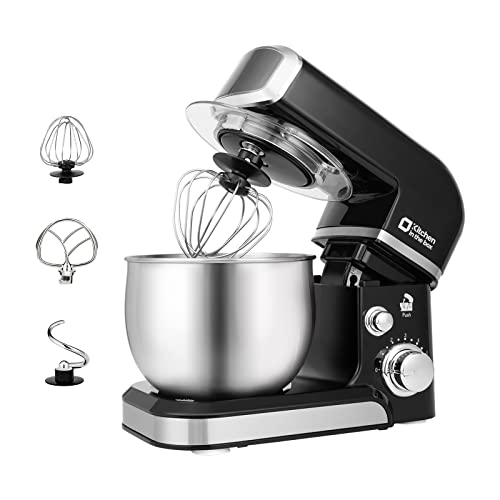
- Lightweight, space-saving design
- Six speeds with dough hook included
- Best for small-batch everyday baking
Best For: New bakers, couples, and small kitchens
Best High-Capacity Stand Mixer
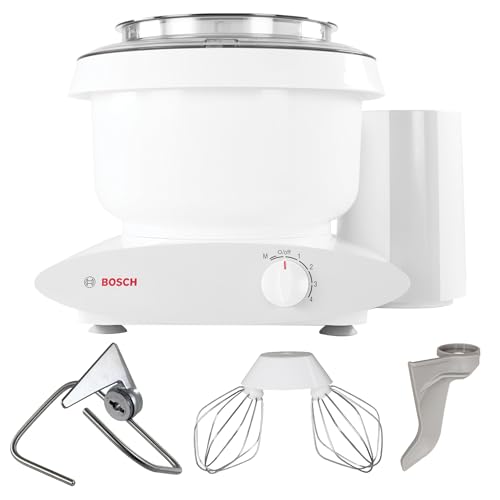
- Handles up to 15 pounds of bread dough
- 500-watt belt-driven transmission
- Includes whips, dough hook, and extender
Best For: Frequent large-batch bakers
Best Versatile Fermenting Dough Maker

- 9.5-quart capacity for large dough batches
- Four modes plus winter and summer fermentation
- Mixes dough and fillings
Best For: Large-batch baking and fermented dough recipes
Best All-Around Pick
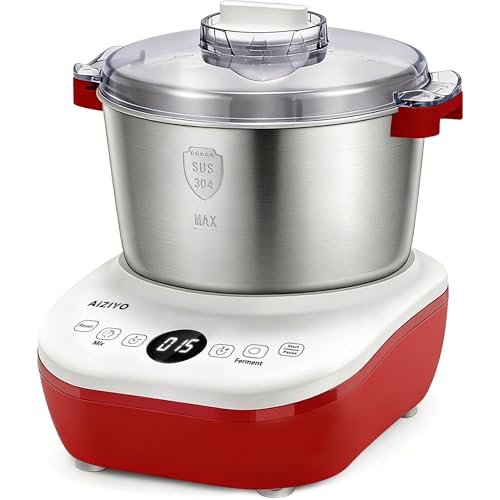
- Mixes and proofs dough in one appliance
- Hand-kneading-style mix-pause-mix program
- 304 stainless steel bowl with touch controls
Best For: Home bakers wanting versatile mixing and proofing
Best Stable Family-Size Option
7.4Qt Kneading & Fermentation Mixer

- 7.4-quart family-size bowl
- Kneads and ferments in one bowl
- Suction feet improve stability
Best For: Frequent large-batch family baking
Best Compact Stand Mixer – Kitchen in the box 3.2Qt Mixer
For shoppers comparing compact dough kneading machines, this lightweight stand mixer is designed for small kitchens, apartments, and limited storage. Its 3.2-quart bowl, six speeds, dough hook, and 300-watt motor cover everyday bread dough, batters, meringues, and whipped cream.
Best For: New bakers, couples, and small households that need a lightweight multipurpose mixer.
Pros:
- Compact 12.9-by-7-by-10.2-inch design weighs less than 7 pounds.
- Includes a dough hook, flat beater, stainless steel whisk, and stainless steel bowl.
- Six speed settings support dough, thick batter, whipping, and delicate mixing.
- Four suction feet and a tilt head help with stability and accessory changes.
Cons:
- The 3.2-quart capacity is better suited to small batches than large-family baking.
- Its 300-watt motor is intended for daily use rather than the heaviest dough workloads.
This is a practical choice when counter space and storage matter most. It offers more versatility than a dedicated dough maker, though serious high-volume bakers may want a larger-capacity machine.
Best Timed Dough Maker – Joydeem 7.4Qt Fermentation Machine
Among compact dough kneading machines, this Joydeem model emphasizes automated kneading and proofing rather than multiple mixer attachments. Its microcomputer controls, preset timing, intermittent kneading motion, and fermentation function can simplify bread, pizza, bun, and dumpling preparation.
Best For: Home bakers who want timed kneading and proofing with minimal hands-on work.
Pros:
- Automatically kneads dough in about 15 minutes and can knead and proof in about 45 minutes.
- 6.6-quart, 7-liter capacity suits larger family batches.
- Intermittent kneading motion simulates a more manual dough-making process.
- Stainless steel bucket and blade are dishwasher safe, while the removable top cover aids cleaning.
Cons:
- It has one non-adjustable speed rather than variable speed control.
- The listed noise level is 70 dB, so it may not be especially quiet during operation.
- It is focused on dough making and does not include the broader beater and whisk versatility of a stand mixer.
The Joydeem is a strong fit for scheduled dough preparation and family-size recipes. Choose it over a traditional stand mixer if fermentation and automated timing are more important than multi-purpose mixing.
Best High-Capacity Stand Mixer – Bosch Universal Plus 6.5Qt
This Bosch Universal Plus is a high-capacity option among compact dough kneading machines, pairing a 6.5-quart bowl with a 500-watt belt-driven transmission. It is built for substantial dough and baking batches while retaining a footprint of about 11 by 12 by 15 inches.
Best For: Frequent bakers who need to knead large batches and use a mixer for more than dough.
Pros:
- 6.5-quart bowl is rated for up to 14 loaves or 15 pounds of whole-grain bread dough.
- Includes wire whips, a dough hook, bowl, lid, splash ring, and dough hook extender.
- Dual beaters provide triple whipping action and can handle tasks from one egg white to mashed potatoes.
- Optional attachments can expand its functions to slicing, shredding, pasta making, juicing, and more.
Cons:
- The 15-inch height may be less convenient under low cabinets.
- The supplied specifications list a 230-volt rating, which requires careful compatibility checking.
- Its plastic bowl and base may feel less traditional than an all-metal mixer.
The Bosch stands out for capacity and dough-handling range rather than the smallest footprint. It makes sense for serious batch baking, provided the electrical specification suits your setup.
Best Versatile Fermenting Dough Maker – Joydeem 9.5Qt Dough Maker
For shoppers seeking compact dough kneading machines with broader preparation controls, this 9.5-quart Joydeem combines kneading, fermentation, and filling-mixing functions. Adjustable times, seasonal fermentation modes, and a 300-watt intermittent motor support recipes ranging from bread and pizza to roti, dumplings, and sourdough.
Best For: Families and multi-purpose home cooks making large dough batches, fermented dough, or dumpling fillings.
Pros:
- Large 9.5-quart bowl handles stated flour weights from 900 to 2,800 grams.
- Four modes cover Mix, Ferment, Mix + Ferment, and Blend.
- Mixing time adjusts from 5 to 30 minutes, while fermentation time adjusts from 5 to 120 minutes.
- Winter and summer fermentation modes help adapt proofing to different environments.
Cons:
- Its 12.9-by-12.2-by-13.8-inch footprint requires more storage space than a mini stand mixer.
- The machine is specialized for dough and filling preparation rather than general whisking and beating.
- The maximum stated flour amount for fermented dough is 2,500 grams, below the overall 2,800-gram flour range.
This is the most feature-rich dough-focused option in the group. Its capacity and adjustable fermentation controls suit ambitious home baking, while the vertical design and suction cups help make the larger machine more manageable.
Best All-Around Pick – AIZIYO DoughChief 5.3QT
For shoppers comparing compact dough kneading machines, the AIZIYO DoughChief combines a 5.3-quart stainless steel bowl with mixing and proofing in one appliance. Its touch controls, timed programs, and wide opening make it practical for bread, pizza, pasta, and mochi dough.
Best For: Home bakers who want an all-in-one mixer and constant-temperature proofing function.
Pros:
- Mix, ferment, or run both functions together.
- Mix-pause-mix program and S-shaped blade simulate hand kneading.
- 77–100°F ferment setting supports more consistent proofing.
- 304 stainless steel bowl and included measuring accessories.
Cons:
- At 75 dB, it may be louder than quieter dough makers.
- The 5.3-quart capacity is smaller than the largest option in this roundup.
- Fermentation requires yeast or fermentation powder.
The DoughChief is a versatile middle-ground choice: it offers more capacity and functionality than a basic kneader while remaining relatively compact at about 11.8 inches square. Consider it if controlled proofing is as important to you as kneading.
Quietest Compact Option – Joydeem 3.7Qt Electric Dough Maker
The Joydeem HMJ-A351 is a compact dough kneading machine designed for smaller batches and quieter operation. Its intermittent kneading motion handles bread, pizza, pasta, sourdough, roti, dumplings, and steamed-bun dough, while separate seasonal fermentation modes help accommodate changing room temperatures.
Best For: Smaller households and bakers who prioritize lower operating noise and adjustable fermentation.
Pros:
- 50 dB rated noise level and four silicone suction cups for stability.
- Summer and Winter fermentation modes maintain different temperature ranges.
- Adjustable mixing times from 5 to 40 minutes.
- 304 stainless steel bowl and blade are designed for durability and easy cleaning.
Cons:
- Its 3.7-quart capacity is the smallest in this selection.
- Maximum flour capacity for fermented dough is 900g.
- Push-button controls and a single operating speed offer less control than speed-adjustable mixers.
Joydeem stands out when countertop space, noise, and seasonal proofing control matter most. Its smaller bowl is a limitation for large family batches, but it suits everyday dough preparation and a broad range of recipes.
Best for Family Batches – AIZIYO DoughChief 7.4QT
If you need compact dough kneading machines with more room for larger recipes, the AIZIYO DoughChief 7.4QT provides a family-size stainless steel bowl in a footprint measuring roughly 11.42 by 12.2 inches. It combines hand-kneading-style mixing with fermenting and includes a face-up touch panel for straightforward operation.
Best For: Families and frequent home bakers making larger bread or pizza batches.
Pros:
- 7.4-quart capacity suits family-size dough batches.
- Mix, Ferment, and Mix & Ferment modes cover different workflows.
- Mix-pause-mix program and removable S-shaped blade support elastic dough development.
- Removable, dishwasher-safe parts simplify cleanup.
Cons:
- Its larger bowl may be more capacity than small households need.
- The machine has one listed speed rather than multiple speed settings.
- Fermentation requires yeast or fermentation powder.
This model is the strongest capacity choice of the three while retaining a relatively compact shape. It makes the most sense for bakers who regularly prepare larger batches and want proofing built into the same appliance.
Best Compact Fermentation Pick – Joydeem 5.3Qt Dough Maker
If you want compact dough kneading machines with built-in proofing, the Joydeem HMJ-A501 combines intermittent kneading with temperature-controlled fermentation in a relatively manageable 5.3-quart design. Its stainless steel bowl, adjustable timers, and suction feet make it a practical option for regular bread and dough preparation.
Best For: Home bakers making bread, pizza, pasta, sourdough, roti, dumplings, or steamed buns in moderate batches.
Pros:
- Supports mixing, fermentation, or a combined mixing-and-fermentation cycle.
- Maintains a 77–100°F fermentation range with a base heating unit.
- Handles 300–1600g of flour, with a maximum of 1300g for fermented dough.
- 304 stainless steel bowl and blade are durable and easy to clean.
Cons:
- Only one speed is available, and the 180W motor is not speed-adjustable.
- The 5.3-quart capacity is smaller than the larger family-size models in this roundup.
- Warm water may be needed during winter because the fermentation temperature is limited.
The Joydeem is a well-rounded choice when countertop space and controlled proofing matter more than maximum capacity. Its timed fermentation and intermittent kneading are especially useful for hands-off home baking.
Best Large-Batch Value – 7.4Qt Fermenting Dough Mixer
Among compact dough kneading machines, this 7.4-quart electric dough maker is suited to bakers who need substantial capacity without moving to a more elaborate mixer. It combines intermittent kneading, constant-temperature fermentation, touch controls, and a top window for adding ingredients while the machine runs.
Best For: Large families, gatherings, and bakers preparing multiple batches of bread, pizza, pastries, or dumplings.
Pros:
- Large 7.4-quart capacity accommodates bigger dough batches.
- Constant-temperature fermentation supports more consistent proofing.
- Top window allows water, seasoning, or other ingredients to be added without stopping.
- Includes automatic shutoff, digital display, and time-setting functions.
Cons:
- The 7.4-quart bowl may be more capacity than smaller households need.
- It has one speed rather than variable-speed control.
- The supplied details do not specify the fermentation temperature range.
This model stands out for capacity and convenience features. The ingredient window and digital controls are useful for hands-off preparation, while the stainless steel construction is intended to handle frequent use.
Best Stable Family-Size Option – 7.4Qt Kneading & Fermentation Mixer
This 7.4-quart model is one of the more practical compact dough kneading machines for family-size baking. It mixes, kneads, and ferments in a single stainless steel bowl, while intermittent kneading and suction feet help manage heavier bread and pizza dough batches.
Best For: Families and frequent home bakers preparing large batches of bread, pizza, sourdough, rolls, or dumplings.
Pros:
- Family-size 7.4-quart capacity reduces the need for multiple batches.
- Combines kneading and fermentation in one bowl to reduce transfers and cleanup.
- Intermittent kneading allows rest periods that may help limit heat buildup.
- 304 stainless steel bowl and suction feet support easier cleanup and stable operation.
Cons:
- The larger capacity may be unnecessary for small dough portions.
- The supplied specifications list a fermentation function but no temperature range or timer details.
- At 13.2 inches tall, it may need more vertical clearance than some compact appliances.
The main appeal is straightforward large-batch convenience: one bowl handles kneading and proofing, and the suction feet help keep the machine steady. It is a sensible pick for routine family baking when maximum portability is not the priority.
How We Picked These Compact Dough Kneading Machines
We focused on the features that matter most in a home baking appliance: bowl capacity, motor performance, kneading design, fermentation controls, ease of operation, and cleanup. The selection includes compact stand mixers for broader kitchen use as well as dedicated dough makers designed primarily for mixing, kneading, and proofing.
Because product specifications vary, check the manufacturer’s current details before buying. A larger bowl does not automatically mean a better machine; dough type, batch size, counter space, and storage all affect the right choice.
Quick Comparison
| Best For | Look For |
|---|---|
| Small households | About 3 to 4 quarts, lightweight construction, and simple speed controls |
| Regular bread baking | About 5 to 7.4 quarts, a sturdy bowl, and a dedicated dough hook or kneading paddle |
| Large batches | 7.4 to 9.5 quarts, stable construction, and sufficient countertop clearance |
| Hands-off proofing | Fermentation settings with adjustable time and temperature controls |
| Multiple kitchen tasks | A stand mixer with interchangeable attachments rather than a dough-only appliance |
Key Buying Factors for Compact Dough Kneading Machines
Capacity and Batch Size
Choose capacity based on the amount of flour you normally use, not just the advertised bowl volume. Smaller machines suit one or two loaves and require less storage space. Larger models are more useful for family-sized batches but may occupy a permanent spot on the counter.
Kneading Performance
Look for a purpose-built dough hook, paddle, or kneading blade, along with a stable base that will not walk across the counter. Dense whole-wheat and stiff doughs place more strain on a motor than soft enriched doughs, so frequent bread bakers should prioritize robust construction over maximum speed count.
Fermentation and Controls
Dedicated dough makers may include timed fermentation, seasonal temperature modes, or separate mixing and blending functions. These features can simplify proofing, but they add controls and may make the appliance less versatile than a conventional stand mixer.
Cleanup and Storage
Removable bowls, lids, and accessories are easier to wash. Consider the machine’s weight, cord storage, lid clearance, and whether attachments can be stored nearby. A compact footprint is only useful if the appliance is practical to lift and put away.
Who Should Buy Which Compact Dough Kneading Machines?
Choose a small stand mixer if you want one appliance for dough, whipped ingredients, batters, and other everyday recipes. These models are generally the most versatile option for smaller kitchens.
Choose a dedicated dough maker if bread and pizza are your main priorities and you want built-in kneading and fermentation programs. This design is especially convenient for bakers who prefer automated proofing.
Choose a mid-size model for regular family baking and a balance between footprint and batch capacity. Choose a large-capacity machine only if you routinely make multiple loaves or large pizza batches and have enough counter space for stable operation.